
Concept
My birthday is coming up soon, and I’ve been spending a lot of time looking through old photos of myself and reminiscing about when I was younger. This inspired me to create a game about going down memory lane and reliving memories from different ages.
In the game, the character “hops” onto each birthday cake and explores the different objects on it. Each object represents a memory from that age. When the character reaches an object (for example a plane) a short piece of text appears explaining the memory connected to it.
Design

The game is structured around different birthday cakes that represent important ages in the character’s life. Each cake has the same overall visual style, but the number of candles, background colour, and objects change depending on the age. The character moves across the cake and interacts with different objects, with each object representing a specific memory from that stage of life. When the character reaches an object, a short piece of text appears describing the memory.
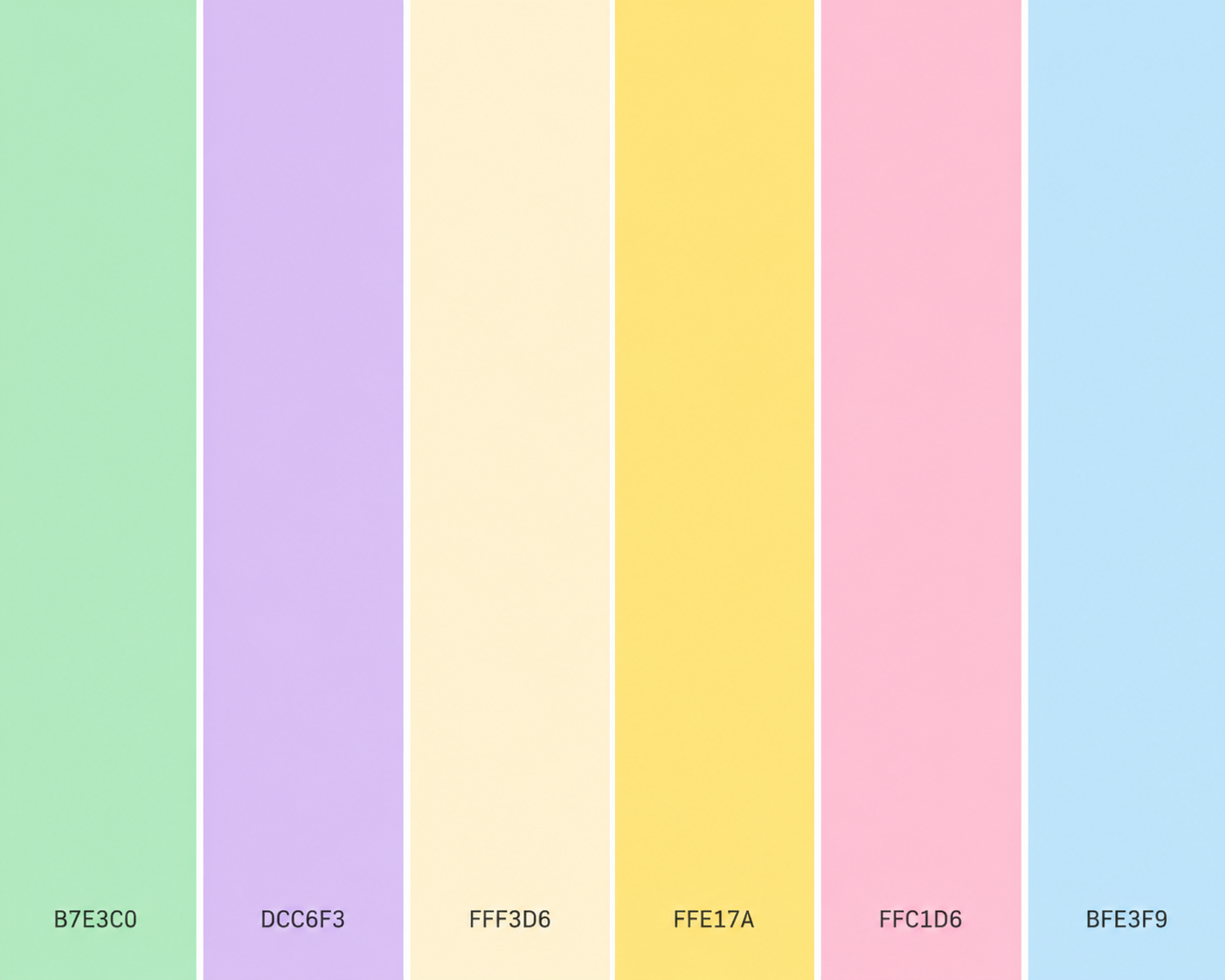
This is the color palette I chose. I used soft pastel colors to create a nostalgic, playful feeling and reflect the innocence and simplicity of childhood.
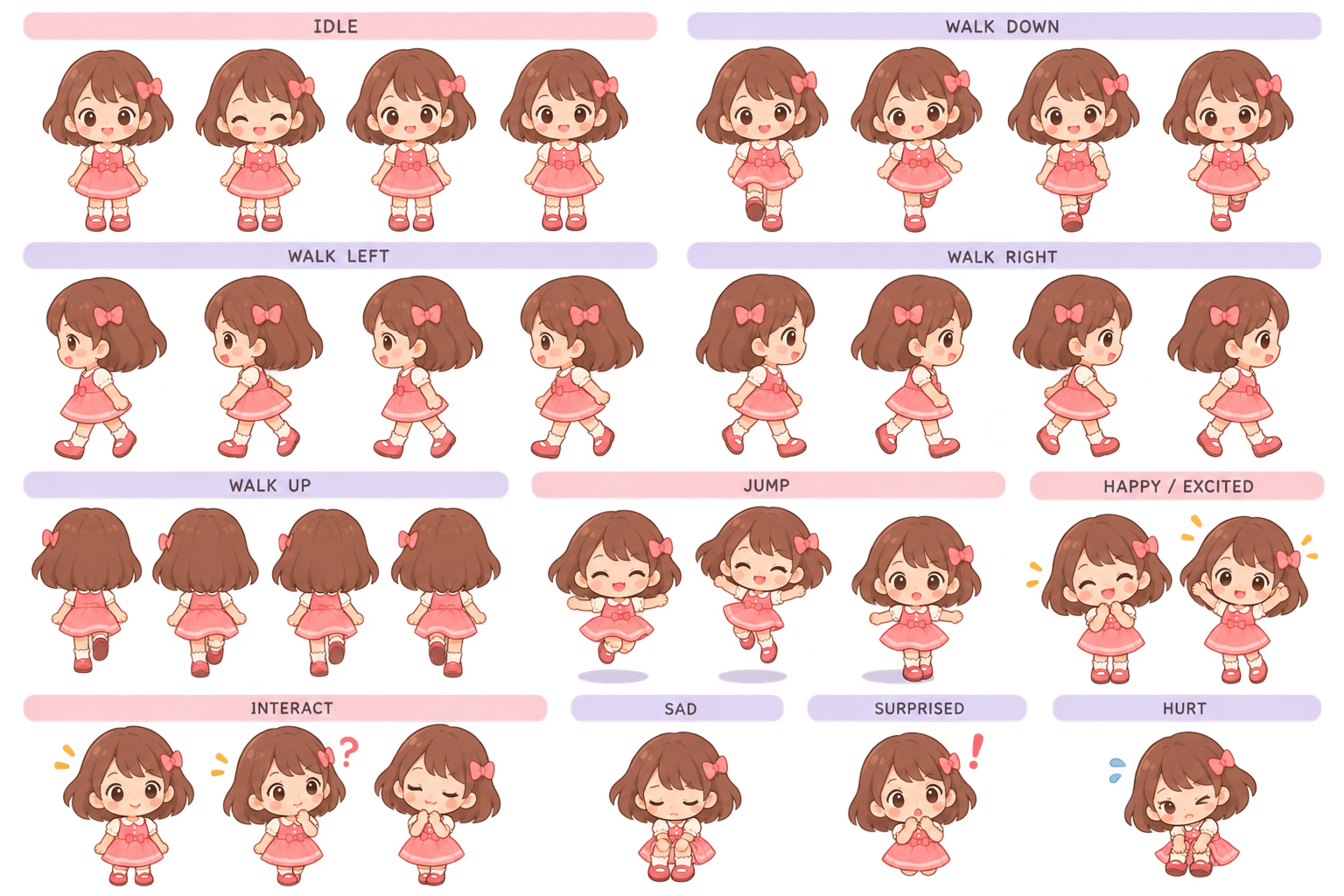
Sprite sheet created using the help of AI.
Uncertainties
I think I might face difficulties with how the character will move around the cakes and how the memories will appear when an object is reached. I am also unsure about how to connect the different ages smoothly so that the game feels like one continuous journey. Another challenge will be finding the right balance between gameplay and storytelling, as I want the game to be interactive without taking away from its nostalgic and personal feeling.
Actions to minimize risk
I will plan the game before developing it and test each part as I go. I will start with simple character movement and interactions before adding more complex features, so any problems can be fixed early. I will also keep the number of memories and animations limited so the project remains manageable.
Reading Reflection
What I found most interesting about this reading was how different computer vision is from human vision. Humans can understand what they are looking at naturally, while computers only see pixels and need specific techniques to find meaning in an image. I also liked the idea that the physical environment can affect how well computer vision works. Things like lighting, contrast, and the background can make it much easier for a computer to detect what it is looking for. This made me realize that designing an interactive experience is not only about the code, but also about designing the environment around it.
One thing I will take away from the reading is that computer vision can make interactions feel more natural by allowing people to use their bodies and movements instead of traditional controls. However, its ability to constantly track people also makes me think about the difference between interactive art and surveillance, especially when people may not realize they are being observed.