Jeux d’argent en ligne avec argent réel : Découvrez Boomerang

Jeux d’argent en ligne avec argent réel : Découvrez Boomerang

Les jeux d’argent en ligne avec argent réel sont devenus une activité populaire en France, attirant des millions de joueurs à la recherche de divertissement et de gains. Parmi les nombreux casinos en ligne disponibles, Boomerang se distingue par son offre variée et ses promotions attrayantes. Dans cet article, nous explorerons l’univers des jeux d’argent en ligne, les avantages de jouer sur Boomerang, ainsi que des conseils pour maximiser votre expérience de jeu.

Qu’est-ce que les jeux d’argent en ligne avec argent réel ?

Les jeux d’argent en ligne avec argent réel incluent une variété de jeux où les joueurs peuvent parier de l’argent réel dans l’espoir de gagner des gains. Cela englobe les machines à sous, les jeux de table comme le blackjack et la roulette, ainsi que les jeux de cartes tels que le poker. Ces plateformes offrent une expérience immersive, permettant aux joueurs de profiter de l’excitation des casinos sans quitter le confort de leur domicile.

Les avantages de jouer en ligne

Jouer à des jeux d’argent en ligne présente de nombreux avantages par rapport aux casinos terrestres :

  • Accessibilité : Les casinos en ligne sont accessibles 24/7, ce qui permet aux joueurs de jouer à tout moment qui leur convient.
  • Variété de jeux : Les plateformes en ligne offrent une vaste gamme de jeux, allant des machines à sous aux jeux de table, en passant par des jeux en direct.
  • Bonus et promotions : Les casinos en ligne proposent souvent des bonus d’inscription et des promotions régulières, ce qui peut augmenter votre bankroll.
  • Confort : Vous pouvez jouer depuis chez vous, sans avoir à vous déplacer ni à faire la queue.

Pourquoi choisir Boomerang ?

Parmi les différentes options de jeux d’argent en ligne, Boomerang se démarque pour plusieurs raisons :

1. Interface conviviale

Le site de Boomerang est conçu pour être intuitif et facile à naviguer. Que vous soyez un joueur novice ou expérimenté, vous trouverez rapidement les jeux que vous aimez. L’interface est également adaptée aux appareils mobiles, vous permettant de jouer où que vous soyez.

2. Large choix de jeux

Boomerang propose une vaste sélection de jeux d’argent en ligne. Vous y trouverez des centaines de machines à sous, des jeux de table classiques, ainsi que des options de jeux en direct avec de véritables croupiers. Cette diversité garantit que chaque joueur peut trouver un jeu qui correspond à ses préférences.

3. Promotions attractives

Le casino Boomerang offre régulièrement des promotions intéressantes, y compris des bonus de bienvenue, des tours gratuits et des offres de cashback. Ces promotions vous permettent de maximiser votre argent et d’augmenter vos chances de gagner.

4. Sécurité et fiabilité

La sécurité est une priorité pour Boomerang. La plateforme utilise des technologies de cryptage avancées pour protéger vos informations personnelles et vos transactions financières. De plus, le casino est licencié et réglementé, ce qui garantit un environnement de jeu équitable.

Comment commencer à jouer sur Boomerang ?

Si vous êtes prêt à plonger dans l’univers des jeux d’argent en ligne avec Boomerang, voici comment procéder :

1. Inscription

Rendez-vous sur le site de Boomerang et cliquez sur le bouton d’inscription. Remplissez le formulaire avec vos informations personnelles, y compris votre nom, votre adresse et votre adresse e-mail. Assurez-vous de choisir un mot de passe sécurisé.

2. Dépôt d’argent

Une fois votre compte créé, vous devrez effectuer un dépôt pour commencer à jouer. Boomerang propose plusieurs méthodes de paiement, y compris les cartes de crédit, les portefeuilles électroniques et les virements bancaires. Choisissez la méthode qui vous convient le mieux et suivez les instructions pour effectuer votre dépôt.

3. Choix des jeux

Après avoir approvisionné votre compte, parcourez la sélection de jeux sur Boomerang. Que vous soyez attiré par les machines à sous, le blackjack, ou le poker, vous trouverez une multitude d’options. Prenez le temps de lire les règles de chaque jeu et commencez à jouer.

4. Profiter des promotions

N’oubliez pas de profiter des promotions disponibles. Consultez régulièrement la section des promotions sur le site de Boomerang pour ne rien manquer. Cela peut vous donner un coup de pouce précieux pour augmenter vos gains.

Conseils pour maximiser votre expérience de jeu

Pour profiter au maximum de votre expérience de jeu sur Boomerang, voici quelques conseils utiles :

  • Fixez un budget : Avant de commencer à jouer, établissez un budget et respectez-le. Cela vous aidera à éviter de dépenser plus que ce que vous pouvez vous permettre de perdre.
  • Faites des pauses : Jouer pendant de longues périodes peut entraîner de la fatigue. Prenez des pauses régulières pour rester concentré et éviter de prendre des décisions impulsives.
  • Essayez les jeux gratuits : Avant de parier de l’argent réel, essayez d’abord les versions gratuites des jeux. Cela vous permettra de vous familiariser avec les règles et les mécanismes du jeu.
  • Profitez des bonus : Utilisez les bonus et les promotions à votre avantage. Cela peut augmenter votre bankroll et prolonger votre temps de jeu.

Les jeux d’argent en ligne et la législation en France

Il est important de comprendre la législation sur les jeux d’argent en ligne en France. La régulation des jeux d’argent est strictement contrôlée par l’Autorité Nationale des Jeux (ANJ). Tous les opérateurs légaux doivent posséder une licence délivrée par l’ANJ, garantissant ainsi un environnement de jeu sûr et équitable.

Les joueurs doivent également être conscients des lois concernant les jeux d’argent en ligne. En France, il est légal de jouer dans des casinos en ligne licenciés, mais il est interdit de jouer sur des sites non régulés. Assurez-vous de vérifier la licence d’un casino avant de vous inscrire.

Conclusion

Les jeux d’argent en ligne avec argent réel offrent une expérience de jeu excitante et potentiellement lucrative. Boomerang se démarque comme une option de choix grâce à sa vaste sélection de jeux, ses promotions attractives et son engagement envers la sécurité des joueurs. Que vous soyez un joueur expérimenté ou un novice, Boomerang a quelque chose à offrir à chacun.

En suivant les conseils mentionnés dans cet article et en jouant de manière responsable, vous pouvez maximiser votre plaisir et vos gains potentiels. Alors, n’attendez plus, lancez-vous dans l’aventure des jeux d’argent en ligne avec Boomerang et découvrez tout ce que cette plateforme a à offrir !
Découvrez votre Casino en Ligne Préféré : Fat Pirate

Découvrez votre Casino en Ligne Préféré : Fat Pirate

Dans l’univers du jeu en ligne, il existe une multitude de casinos qui rivalisent pour attirer l’attention des joueurs. Parmi eux, Fat Pirate casino se distingue par son ambiance unique et ses offres exceptionnelles. Dans cet article, nous allons explorer pourquoi Fat Pirate est considéré comme le casino en ligne préféré de nombreux joueurs en France.

Une Ambiance de Jeu Unique

Fat Pirate casino se distingue par sa thématique maritime captivante. Les graphismes colorés et l’interface utilisateur intuitive créent une expérience immersive qui transporte les joueurs dans un monde de pirates et de trésors. Chaque section du site est conçue pour refléter cette ambiance, rendant le jeu non seulement amusant, mais aussi visuellement agréable.

Des Graphismes Impressionnants

Les jeux proposés sur Fat Pirate sont dotés de graphismes de haute qualité. Que vous soyez un amateur de machines à sous ou de jeux de table, vous serez séduit par les visuels attrayants et les animations fluides qui accompagnent chaque partie.

Une Interface Intuitive

L’une des forces de Fat Pirate casino est sa facilité d’utilisation. Que vous soyez un joueur expérimenté ou un novice, la navigation sur le site est simple et directe. Les catégories de jeux sont bien définies, permettant aux utilisateurs de trouver rapidement leurs jeux préférés.

Une Large Sélection de Jeux

Fat Pirate propose une vaste gamme de jeux qui satisferont tous les types de joueurs. Que vous soyez à la recherche de machines à sous, de jeux de table ou de jeux en direct, vous trouverez tout ce dont vous avez besoin.

Machines à Sous Diversifiées

  • Des machines à sous classiques aux plus modernes, Fat Pirate offre des titres variés.
  • Des jackpots progressifs qui permettent de gagner gros.
  • Des thèmes variés, allant de l’aventure à la mythologie.

Jeux de Table Classiques

Les amateurs de jeux de table ne seront pas en reste avec une large sélection de jeux emblématiques tels que :

  • Le Blackjack
  • La Roulette
  • Le Poker

Expérience de Jeu en Direct

Pour ceux qui recherchent une expérience plus immersive, Fat Pirate propose également des jeux en direct. Les croupiers en direct permettent aux joueurs de vivre l’excitation d’un casino terrestre tout en restant dans le confort de leur foyer.

Des Bonus et Promotions Attractifs

Un autre aspect qui fait de Fat Pirate casino un choix privilégié est la générosité de ses bonus et promotions. Les nouveaux joueurs sont accueillis avec un bonus de bienvenue attrayant qui leur permet de commencer leur aventure avec un coup d’avance.

Bonus de Bienvenue

Le bonus de bienvenue est conçu pour aider les nouveaux joueurs à explorer le site. Il est souvent accompagné de tours gratuits sur certaines machines à sous, ce qui permet de maximiser les chances de gains dès le départ.

Promotions Régulières

Fat Pirate ne se limite pas aux bonus de bienvenue. Le site propose également des promotions régulières, notamment :

  • Des remises en argent sur les pertes
  • Des tournois avec des prix intéressants
  • Des bonus de recharge pour les joueurs existants

Un Service Client de Qualité

La satisfaction des joueurs est une priorité pour Fat Pirate. Le casino offre un service client réactif et professionnel, disponible à tout moment via plusieurs canaux de communication.

Support 24/7

Les joueurs peuvent contacter le support client à toute heure du jour ou de la nuit. Que ce soit par chat en direct, par email ou par téléphone, l’équipe est prête à répondre à toutes vos questions et à résoudre vos problèmes rapidement.

Des Méthodes de Paiement Sécurisées

Fat Pirate casino prend très au sérieux la sécurité des transactions. Le site propose une variété de méthodes de paiement pour faciliter les dépôts et les retraits, tout en garantissant la sécurité des informations personnelles des joueurs.

Dépôts et Retraits Faciles

Les joueurs peuvent choisir parmi plusieurs options, y compris :

  • Cartes de crédit et de débit
  • Portefeuilles électroniques
  • Virements bancaires

Transactions Sécurisées

Fat Pirate utilise des protocoles de sécurité avancés pour protéger les données des joueurs. Les transactions sont chiffrées, garantissant ainsi que vos informations restent confidentielles.

Une Plateforme Accessible sur Mobile

Avec l’essor des jeux sur mobile, Fat Pirate casino a développé une plateforme entièrement optimisée pour les appareils mobiles. Que vous utilisiez un smartphone ou une tablette, vous pouvez profiter de votre casino en ligne préféré où que vous soyez.

Compatibilité Multi-Appareils

La version mobile de Fat Pirate offre une expérience de jeu fluide, avec une sélection de jeux adaptés aux écrans tactiles. Les joueurs peuvent facilement accéder à leurs jeux préférés et profiter de toutes les fonctionnalités du casino.

Applications Mobiles

Pour ceux qui préfèrent jouer via une application, Fat Pirate propose également des applications dédiées pour les utilisateurs iOS et Android. Cela permet un accès encore plus rapide et pratique aux jeux et aux promotions.

Jeux Responsables et Équité

Fat Pirate casino est engagé en faveur du jeu responsable. Le site offre des outils et des ressources pour aider les joueurs à gérer leur temps et leur budget de jeu. De plus, tous les jeux sont régulièrement audités pour garantir leur équité.

Outils de Jeu Responsable

Les joueurs peuvent définir des limites de dépôt, de perte et de temps de jeu pour s’assurer qu’ils jouent de manière responsable. Fat Pirate encourage tous ses joueurs à utiliser ces outils pour garantir une expérience de jeu positive.

Équité des Jeux

Les jeux proposés sur Fat Pirate sont fournis par des développeurs réputés, assurant ainsi des résultats équitables et transparents. Les générateurs de nombres aléatoires (RNG) sont régulièrement testés pour garantir leur conformité aux normes de l’industrie.

Conclusion : Pourquoi Choisir Fat Pirate Casino

En résumé, Fat Pirate casino se positionne comme le casino en ligne préféré de nombreux joueurs en France grâce à son ambiance unique, sa vaste sélection de jeux, ses promotions attractives et son engagement envers le jeu responsable. Si vous recherchez une expérience de jeu en ligne captivante et sécurisée, ne cherchez pas plus loin que Fat Pirate casino. Que vous soyez un joueur occasionnel ou un passionné de jeux, Fat Pirate a quelque chose à offrir à chacun.

Rejoignez la communauté de Fat Pirate aujourd’hui et partez à la recherche de trésors inestimables tout en profitant d’une expérience de jeu inégalée !

Dépôt Casino eCheck : Découvrez Fat Pirate et ses Avantages

Dépôt Casino eCheck : Découvrez Fat Pirate et ses Avantages

Dans le monde des jeux en ligne, les méthodes de dépôt jouent un rôle crucial dans l’expérience du joueur. Parmi ces options, le dépôt par eCheck se distingue par sa simplicité et sa sécurité. Dans cet article, nous allons explorer le dépôt casino eCheck, ses avantages, et comment le site fat-pirate-casino-fr.com facilite cette méthode de paiement pour ses utilisateurs.

Qu’est-ce qu’un eCheck ?

Un eCheck, ou chèque électronique, est une méthode de paiement numérique qui permet aux joueurs de transférer de l’argent directement de leur compte bancaire à leur compte de casino en ligne. Ce système fonctionne de manière similaire à un chèque traditionnel, mais il est traité électroniquement, ce qui le rend plus rapide et plus pratique.

Pourquoi Choisir le Dépôt par eCheck ?

Le dépôt par eCheck présente plusieurs avantages, notamment :

  • Sécurité Renforcée

  • Les transactions par eCheck sont généralement sécurisées par des protocoles de cryptage avancés, assurant ainsi que les informations de votre compte bancaire restent confidentielles.

  • Transactions Rapides

  • Contrairement aux chèques papier qui peuvent prendre plusieurs jours à être traités, les eChecks permettent des dépôts instantanés dans votre compte de casino.

  • Facilité d’Utilisation

  • Pour ceux qui sont habitués à faire des paiements en ligne, l’utilisation d’un eCheck est simple et intuitive, ce qui rend le processus de dépôt fluide.

  • Pas de Frais Cachés

  • La plupart des casinos en ligne, y compris Fat Pirate, ne facturent pas de frais pour les dépôts effectués par eCheck, ce qui en fait une option économique.

Comment Faire un Dépôt par eCheck sur Fat Pirate ?

Le site fat-pirate-casino-fr.com simplifie l’utilisation d’eCheck pour ses utilisateurs. Voici un guide étape par étape pour effectuer un dépôt :

Étape 1 : Créez un Compte

Si vous n’avez pas encore de compte, rendez-vous sur le site de Fat Pirate et inscrivez-vous. Assurez-vous de fournir des informations précises lors de votre inscription.

Étape 2 : Accédez à la Section Dépôt

Une fois connecté, allez dans la section « Dépôt » de votre compte. Vous y trouverez différentes options de paiement, y compris l’eCheck.

Étape 3 : Sélectionnez eCheck comme Méthode de Paiement

Cliquez sur l’option eCheck. Vous devrez entrer les détails de votre compte bancaire, y compris le numéro de compte et le numéro de routage.

Étape 4 : Saisissez le Montant à Déposer

Indiquez le montant que vous souhaitez déposer sur votre compte de casino. Assurez-vous que ce montant respecte les limites de dépôt du site.

Étape 5 : Confirmez la Transaction

Revoyez les informations que vous avez saisies et confirmez la transaction. Une fois validée, les fonds seront immédiatement disponibles sur votre compte.

Les Avantages de Jouer sur Fat Pirate

Fat Pirate n’est pas seulement un site qui accepte les dépôts par eCheck, il offre également une multitude d’avantages pour ses joueurs. Voici quelques raisons pour lesquelles vous devriez envisager de jouer sur ce site :

  • Large Sélection de Jeux

  • Fat Pirate propose une vaste gamme de jeux, allant des machines à sous aux jeux de table, en passant par les jeux de croupier en direct. Il y en a pour tous les goûts.

  • Offres et Bonus Attrayants

  • Les nouveaux joueurs peuvent profiter de bonus de bienvenue généreux, tandis que les joueurs réguliers bénéficient de promotions régulières et de programmes de fidélité.

  • Service Client Réactif

  • Le service client de Fat Pirate est disponible 24/7 pour répondre à toutes vos questions et résoudre vos problèmes.

  • Interface Conviviale

  • Le site est conçu pour être facile à naviguer, que vous jouiez sur un ordinateur ou un appareil mobile. L’expérience utilisateur est au cœur de la conception de Fat Pirate.

Les Inconvénients du Dépôt par eCheck

Bien que le dépôt par eCheck présente de nombreux avantages, il existe également quelques inconvénients à considérer :

  • Temps de Traitement pour les Retraits

  • Si les dépôts sont instantanés, les retraits par eCheck peuvent prendre plus de temps à être traités par rapport à d’autres méthodes de paiement.

  • Disponibilité Limitée

  • Tous les casinos en ligne n’acceptent pas les eChecks comme méthode de dépôt, il est donc essentiel de vérifier cette option avant de s’inscrire.

  • Exigences de Vérification

  • Les casinos peuvent exiger une vérification supplémentaire lors de l’utilisation d’un eCheck, notamment la vérification de l’identité et des informations bancaires.

Alternatives au Dépôt par eCheck

Si le dépôt par eCheck ne vous convient pas, voici quelques alternatives populaires que vous pourriez envisager :

  • Cartes de Crédit/Débit

  • Les cartes Visa et Mastercard sont largement acceptées et permettent des dépôts rapides et sécurisés.

  • Portefeuilles Électroniques

  • Des services comme PayPal, Skrill, et Neteller offrent une méthode de dépôt rapide et sécurisée, tout en protégeant vos informations bancaires.

  • Cryptomonnaies

  • Les casinos commencent à accepter les cryptomonnaies comme Bitcoin et Ethereum, offrant ainsi une option de dépôt anonyme et rapide.

Conclusion

Le dépôt par eCheck représente une méthode fiable et sécurisée pour les joueurs de casino en ligne, en particulier sur des sites comme fat-pirate-casino-fr.com. Avec ses nombreuses fonctionnalités et son interface conviviale, Fat Pirate se démarque comme une destination de choix pour ceux qui souhaitent profiter de l’excitation des jeux en ligne.

Que vous soyez un joueur expérimenté ou un novice, l’utilisation d’eCheck simplifie le processus de dépôt tout en offrant une sécurité renforcée. N’hésitez pas à explorer cette méthode de paiement et à profiter des nombreux avantages qu’elle a à offrir sur Fat Pirate. Bon jeu !

Meilleures machines à sous en ligne – Découvrez Slotexo

Meilleures machines à sous en ligne – Découvrez Slotexo

Les machines à sous en ligne sont devenues l’un des jeux de casino les plus populaires au monde, attirant des joueurs de tous horizons. Que vous soyez un novice ou un joueur expérimenté, il existe une multitude de choix qui s’offrent à vous. Dans cet article, nous allons explorer les meilleures machines à sous en ligne disponibles en France, en mettant en lumière la plateforme Slotexo, qui se distingue par sa large sélection de jeux et ses fonctionnalités attrayantes.

Qu’est-ce qu’une machine à sous en ligne ?

Les machines à sous en ligne sont des jeux de casino numériques qui simulent l’expérience des machines à sous traditionnelles que l’on trouve dans les casinos physiques. Elles fonctionnent grâce à des générateurs de nombres aléatoires (RNG) qui garantissent des résultats équitables. Les joueurs peuvent miser de l’argent réel pour tenter de gagner des jackpots, des bonus et d’autres récompenses.

Pourquoi choisir Slotexo pour jouer aux machines à sous ?

Slotexo est une plateforme de casino en ligne qui offre une expérience de jeu complète et immersive. Voici quelques raisons pour lesquelles vous devriez envisager de jouer sur Slotexo :

  • Large sélection de jeux : Slotexo propose une vaste gamme de machines à sous en ligne, des classiques aux nouveautés excitantes.
  • Bonus attractifs : Les nouveaux joueurs peuvent bénéficier de bonus d’inscription généreux, tandis que les joueurs réguliers peuvent profiter de promotions fréquentes.
  • Interface conviviale : La plateforme est facile à naviguer, ce qui facilite la recherche de vos jeux préférés.
  • Sécurité et fiabilité : Slotexo utilise des technologies de pointe pour garantir la sécurité de vos informations personnelles et financières.

Les caractéristiques des meilleures machines à sous en ligne

Lorsque vous choisissez une machine à sous, certaines caractéristiques peuvent influencer votre expérience de jeu. Voici les éléments clés à prendre en compte :

Taux de retour au joueur (RTP)

Le RTP est un indicateur qui montre le pourcentage des mises qui sont redistribuées aux joueurs sous forme de gains. Une machine à sous avec un RTP élevé (généralement supérieur à 95%) est plus susceptible de vous offrir des gains à long terme.

Volatilité

La volatilité d’une machine à sous détermine la fréquence et la taille des gains. Les machines à sous à faible volatilité offrent des gains fréquents mais de moindre montant, tandis que celles à forte volatilité peuvent offrir des gains moins fréquents mais plus importants.

Thème et graphismes

Les machines à sous viennent dans une variété de thèmes, allant des aventures fantastiques aux classiques inspirés des fruits. Les graphismes et les animations peuvent enrichir votre expérience de jeu, rendant chaque session plus immersive.

Fonctionnalités bonus

Les meilleures machines à sous en ligne offrent souvent des fonctionnalités bonus telles que des tours gratuits, des multiplicateurs et des jeux bonus. Ces éléments peuvent augmenter vos chances de gains et rendre le jeu plus excitant.

Les meilleures machines à sous en ligne à essayer en 2023

Voici une sélection des meilleures machines à sous en ligne que vous pouvez trouver sur Slotexo, chacune offrant une expérience unique :

1. Starburst

Starburst est l’une des machines à sous les plus populaires, connue pour ses graphismes colorés et ses gains fréquents. Avec un RTP de 96.1% et des fonctionnalités de respins, elle est idéale pour les joueurs à la recherche de divertissement.

2. Book of Dead

Cette machine à sous, inspirée de l’Égypte ancienne, propose un gameplay captivant avec un RTP de 96.21%. Les joueurs peuvent profiter de tours gratuits et de symboles expansifs, augmentant ainsi leurs chances de gains importants.

3. Gonzo’s Quest

Gonzo’s Quest est unique grâce à son mécanisme de rouleaux en cascade. Avec un RTP de 95.97% et des fonctionnalités de tours gratuits, cette machine à sous offre une expérience de jeu innovante.

4. Mega Moolah

Connue pour ses jackpots progressifs, Mega Moolah est une machine à sous incontournable. Avec un RTP de 88.12%, elle a fait des millionsaires à plusieurs joueurs. La possibilité de gagner un jackpot massif attire de nombreux amateurs de jeux.

5. Divine Fortune

Divine Fortune est une autre machine à sous à jackpot progressif qui plonge les joueurs dans un monde mythologique. Avec un RTP de 96.59%, elle offre des graphismes impressionnants et des fonctionnalités bonus intéressantes.

Comment maximiser vos gains sur les machines à sous en ligne

Jouer aux machines à sous en ligne peut être amusant, mais il est également important de jouer de manière stratégique. Voici quelques conseils pour maximiser vos gains :

  • Choisissez des machines avec un RTP élevé : Cela augmente vos chances de gagner sur le long terme.
  • Profitez des bonus : Utilisez les offres de bienvenue et les promotions pour augmenter votre capital de jeu.
  • Fixez un budget : Déterminez à l’avance combien vous êtes prêt à dépenser et respectez ce montant.
  • Essayez les jeux gratuits : Avant de miser de l’argent, testez les machines à sous en mode démo pour vous familiariser avec leur fonctionnement.

Les tendances à surveiller dans le monde des machines à sous en ligne

Le monde des machines à sous en ligne est en constante évolution. Voici quelques tendances à surveiller :

1. Réalité virtuelle et augmentée

Avec l’avancée technologique, de plus en plus de casinos en ligne explorent la réalité virtuelle et augmentée pour offrir une expérience de jeu immersive. Ces innovations pourraient transformer la manière dont les joueurs interagissent avec les machines à sous.

2. Jeux basés sur des films et des séries

Les machines à sous basées sur des films ou des séries TV populaires continuent d’attirer les joueurs. Ces jeux intègrent des éléments narratifs et des graphismes inspirés des productions cinématographiques.

3. Intégration de la blockchain

La technologie blockchain est en train de gagner en popularité dans le secteur des jeux en ligne. Elle offre une transparence accrue et des transactions sécurisées, ce qui pourrait séduire de nombreux joueurs.

Conclusion

Les machines à sous en ligne offrent une expérience de jeu captivante et lucrative. En choisissant des plateformes fiables comme Slotexo, vous pouvez profiter d’une vaste sélection de jeux, de bonus attractifs et d’une interface conviviale. N’oubliez pas de prendre en compte des éléments comme le RTP, la volatilité et les fonctionnalités bonus lorsque vous choisissez vos jeux. Que vous soyez un joueur occasionnel ou un passionné de machines à sous, les options sont nombreuses et excitantes.

Pour découvrir les meilleures machines à sous en ligne et commencer votre aventure de jeu, visitez http://slotexo-casino-fr.com/ dès aujourd’hui !

Midterm Project – The Maze Captures

Concept:

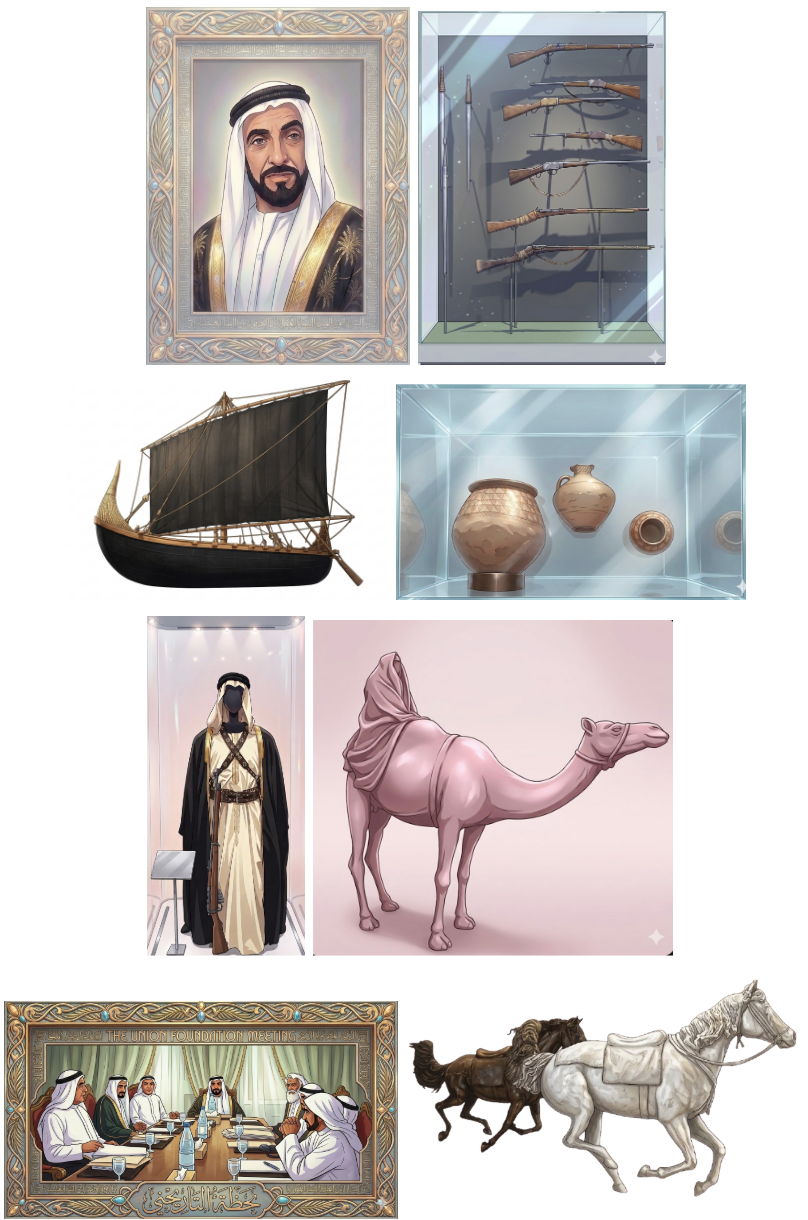
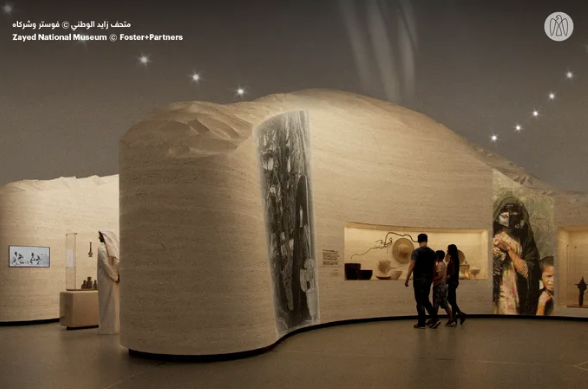
My midterm project is designed as a new interactive game that combines both an artistic experience and an enjoyable gameplay element. The Maze Captures is inspired by the Sheikh Zayed Museum and the Qasr Al Hosn Festival in Abu Dhabi. The artistic aspect comes from the museum, which is modern in design while maintaining a strong historical and cultural connection to the United Arab Emirates. I then developed the game aspect based on the Qasr Al Hosn Festival, which featured a culturally themed escape room, but I adapted this idea into my own concept.

Here is an image that demonstrates my inspiration from the Sheikh Zayed National Museum in Abu Dhabi:

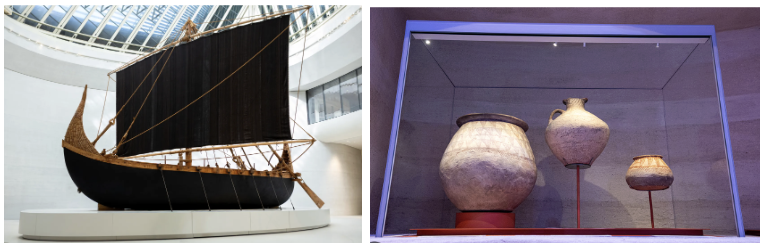
The concept of the game is to allow the player to walk around and experience a museum-like environment filled with Emirati cultural artworks. These artworks are AI-generated interpretations of real pieces found in the Sheikh Zayed Museum. Each time an object is spotted, the player must position it within their camera lens frame and capture it within a specified time to increase their score. Below are two of the 8 actual references used to create the artworks in my game:

Embedded Sketch:

How it works:

The game begins with an instruction screen, allowing the user to understand what is expected for the game to function properly. When the player presses the space bar, they are positioned at the start of the maze. The player uses the arrow keys to move smoothly and the mouse pad to look around, allowing for easier navigation and a more immersive experience. The maze is structured to provide multiple paths, similar to a traditional maze, with various types of objects, ranging from artworks to cultural items, placed throughout the space. I also included background music inspired by a song about Sheikh Zayed to reinforce the cultural theme and atmosphere of the museum. When an object is spotted, it must be centered within the camera lens frame and captured using the Enter key. A capture sound effect is played to enhance interactivity and create a sense of realism. Each time an object is captured, the player’s score increases depending on how much time remains, the earlier the capture, the higher the score. Once the timer ends, the player can view their final score and press the space bar to restart the game.

In terms of code organization, I used Object-Oriented Programming by creating two classes: one for walls and one for objects. Since these elements are repeated multiple times in different positions, using classes allowed me to keep the code organized and reusable by simply calling them in the sketch and adjusting their positions as needed. I then structured the main sketch using the three game states we covered: a start screen, the gameplay screen, and an end screen where the user can return to the beginning. I handled user interaction through functions such as keyPressed() for keyboard input and mouseDragged() for camera movement. Additionally, I incorporated audio elements, including a capture sound effect and background music, to enhance the realism and overall experience of the game. I also implemented collision detection to ensure that the player cannot walk through walls, which helps maintain the structure and realism of the maze. The project was built using WEBGL mode, which allowed me to create a 3D environment and simulate a first-person perspective using a camera system.

Parts I am proud of:

I am particularly proud of creating the movement of the player, as it initially started as a problem, but I was able to overcome it in the best way possible. The issue was that the arrow keys were not aligned with the movement and would keep switching directions, meaning that sometimes the forward key would move the player backwards and vice versa. I also couldn’t properly look around to decide which direction I was walking in. I then realized that I needed to use sine and cosine to control the direction, and carefully adjust the positive and negative values for each key. This allowed each movement key to function correctly without conflicting with the others. I also used the mouseDragged() function, which we covered in class, to allow the player to look around left and right.

CODE

Another part I am proud of, which was also challenging at first, was preventing the player from walking through walls. This issue made the game feel unrealistic and not function as intended. By following tutorials on movement in WEBGL, I was able to implement collision detection using a loop and a detection function to stop the player from passing through walls. I also applied this logic to prevent the player from moving outside the boundaries of the game floor. However, I acknowledge that this system is not 100% accurate, as moving too close to a wall can sometimes allow the player to slightly see through it. This is something I would improve in the future.

CODE

The part I am most proud of is placing the walls and objects within the maze. Since the project is built in a 3D environment, I had to continuously move around the space to check the positioning, orientation, and visibility of each element. This included making sure that walls were correctly aligned, objects were facing the right direction, and everything was visible and accessible to the player. After several adjustments and iterations, I became much more confident and was able to place elements exactly where I wanted them.

CODE

Another simple but meaningful aspect I am proud of is my design decisions. I chose to use actual artworks from the museum as references, recreate them as visual elements in the game, and combine them with background music related to Sheikh Zayed. I believe these choices added cultural value and depth to the overall experience.

Problems I ran into:

This project was a real challenge, and I had to work through most of the steps independently. As mentioned above, I struggled with player movement, interaction within the 3D space, and the placement of objects throughout the maze, but I was able to resolve these issues through testing and adjustments.

However, there were two features from my initial plan that I decided to leave for future development, as they were slowing down my progress. The main challenge was adding a 2D camera frame that would include the timer and score. I wanted these elements to remain stable and fixed on the player’s screen, but since the project uses WEBGL, it was difficult to achieve. Every attempt resulted in issues such as the player moving through the frame or the timer and score appearing unstable or misplaced. I experimented with different approaches, including using resetMatrix() and attempting to switch between 2D and 3D rendering based on available resources, but I was unable to achieve the desired result within the time I had. Instead, I adapted this limitation into a design decision by encouraging players on the start screen to move quickly in order to achieve a higher score within the 30-second limit, and by displaying the final score at the end of the game.

Areas for improvement:

Overall, I am proud of my project. Working with WEBGL required a significant amount of effort, and I believe I successfully challenged myself and managed to achieve a strong outcome. However, there are several areas I would like to improve in the future, particularly in terms of visual design and graphics. 

One key improvement would be implementing the features I originally planned, such as a camera frame with a visible timer and score during gameplay. In addition, I would like to enhance the environment by adding more detailed and advanced visual elements, such as decorative features or more refined structures, to make the experience feel more realistic and immersive. I would also like to expand the environment beyond the interior of the maze by designing an exterior view of the museum, allowing players to explore both inside and outside spaces. Another potential improvement would be adding more interactive elements, such as objects that trigger sounds or actions when interacted with, to further engage the player.

References:

I began by learning about WEBGL mode in order to create my project in the way I envisioned, using the following resources:

https://p5js.org/reference/p5/WEBGL/ 

https://youtu.be/nqiKWXUX-o8?si=tSUSM77-Ie64E13u 

To meet the assignment requirements, I also used the slides covered in class, particularly those from Week 6, which included useful concepts for the project. I referred back to these materials whenever I had specific questions.

Go into fullscreen:

https://p5js.org/reference/p5/fullscreen/ 

Since I worked in WEBGL mode, I followed tutorials and reference links for different parts of the project:

Setting up the maze, with the floor and walls:
https://youtu.be/6TPVoB4uQCU?si=LFsx9b4IhB0HOYoW 

Allowing the player to move around:

https://youtu.be/BW3D9WwalQE?si=144ULyiZDN_HCjMr

Add images and objects in the maze:

https://youtu.be/O1mYw-3Wl_Q?si=4ENHn11BepkQGdqX

Through these videos, I found a sample of a 3D game, which I used as a reference for specific aspects such as object placement and movement. This was discovered through the following video:

Through this video:
https://youtu.be/VoFsB0toORk?si=TB3XRVKkrED6CbsE

I found this code:

https://github.com/jrc03c/queasycam/blob/master/examples/MazeRunner/Maze.pde

I used Gemini to generate the visual assets in my project, including the start page and the artworks. For the artworks, I uploaded images of real pieces and asked for regenerated versions in a specific style, aiming for a modern, clean, anime-inspired aesthetic. For the start page, I specified the text, font, colors, and overall layout I wanted.

I also used ChatGPT throughout my development process to assist with challenges I faced when I could not find solutions through other resources, particularly for debugging and problem-solving as the code became more complex. Below are some clear examples of how I used it:

When working on the placement of walls in the maze, I became confused about positive and negative coordinates. I was guided using the following diagram to better understand the WEBGL coordinate system:

              -Z (forward)

                  ↑

                  |

                  |

– X (left) ← —— (0,0) —— → +X (right)

                  |

                  |

                  ↓

              +Z (back)

I also wanted to view the maze from above to better understand the layout and avoid duplicating paths. A temporary solution was suggested, which allowed me to toggle between a first-person and top-down view using a key. I implemented this feature during development and removed it afterward. This helped me understand how to switch perspectives in WEBGL using the keyPressed() function. The code used was:

let topView = false;

In keyPressed();
if (key === 'T' || key === 't'){
topView = !topView;
}

In runGame();
if (topView){
  camera(0, -800, 0, 0, 0, 0, 0, 0, -1);
} else {
  camera(
    player.x,
    -50,
    player.z,
    player.x + sin(angle) * 100,
    -50,
    player.z - cos(angle) * 100,
    0,
    1,
    0
  );
}

Finally, when completing the project, I encountered an issue where pressing the space bar at the end of the game would immediately restart gameplay instead of returning to the start screen. I learned that this was because both game states were using the same key input. I resolved this by restructuring the condition to first check for the key press, and then use if and else if statements to assign different outcomes depending on the current game state.

Midterm Project: Salama’s Nail Salon

For my midterm project, I made an interactive nail salon game in p5.js called Salama’s Nail Salon. The idea of the game is that a customer gives a short line that hints at the kind of color they want, and the player has to choose a nail polish color that matches it. I wanted it to feel simple and cute, but still have actual game logic behind it, so I used mood-based color matching instead of making it just about choosing any random color. Then, the player uses a hue slider to test different shades, and the game gives a result out of five stars depending on how close the chosen color is to the customer’s intended mood.

To build the project, I first split it into three main screens, which helped me organize the whole game better. I made a start screen with instructions, a playing screen where the customer gives their line and the player chooses a nail color, and a result screen that gives feedback and has a restart button in case the player would like to try again. Structuring the project this way made it much easier for me to understand the logic of the game and the logic of the code.

For the visuals, I used AI to produce my background image of a nail salon, and I added a font and soft pink buttons so the overall style fit a nail salon game. One part I spent a lot of time on was the nail itself. Instead of drawing the full finger, I used a finger image and drew a nail shape with the chosen color directly on top of it so the player could see the polish update on the actual nail. This took a lot of trial and error, because the shape had to be positioned and rounded carefully to fit inside the nail correctly. I also added a glossy highlight so it looked more like actual nail polish instead of just a flat shape.

I am especially proud of the result system, because the result compares the chosen color to the target color for the customer’s mood and then gives a star rating from one to five. At first, I was showing more technical feedback, like how far the player was from the target color, but when I made my sister Salama try the game, I realized that the results did not fit the tone of the game very well. Since the game is meant to feel playful and easy to understand, I changed the result screen so it gives simple reactions and color-based hints instead, and I think this made the game feel much more natural and kid-friendly. However, I did use AI to help with this part, and I explain exactly how I used it at the end of my blog.

function resultFeedback() {
  if (stars === 5) {
    resultTitle = "Perfect match!";
    resultHint = "The customer loved this color.";
  } else if (stars === 4) {
    resultTitle = "So close!";
    resultHint = colorHint(correctMood);
  } else if (stars === 3) {
    resultTitle = "Nice try!";
    resultHint = colorHint(correctMood);
  } else if (stars === 2) {
    resultTitle = "Not quite yet!";
    resultHint = colorHint(correctMood);
  } else {
    resultTitle = "Oops!";
    resultHint = "That color was far from what the customer wanted.";
  }
}

function colorHint(mood) {
  if (mood === "Happy") {
    return "The customer wanted a brighter, sunnier color.";
  } else if (mood === "Calm") {
    return "The customer wanted a softer, more bluish color.";
  } else if (mood === "Confident") {
    return "The customer wanted a bolder, more purple color.";
  } else if (mood === "Sad") {
    return "The customer wanted a deeper, darker color.";
  } else {
    return "Try a different shade next time.";
  }
}


Another part I am happy with is that I included multiple customer moods and randomized phrases, so the game does not feel exactly the same every time. I also used object-oriented programming by making a Customer class. Each round creates a customer object that stores the customer’s mood and phrase, and this helped me organize the dialogue part of the game more clearly. I used arrays of phrases for each mood and randomly selected one for each round. I also used buttons, a slider, text, images, shapes, and sound, so the final sketch combines a lot of the tools we have learned. Even though the game looks simple, there is a lot of structure behind it, and I’m really proud of how I organized it.

One challenge I ran into was figuring out how to make the game feel visually complete without making it too complicated. I originally was not sure how to show the nail color in a way that looked convincing, and I had to test many different values before the color shape finally fit the nail properly. Another challenge was deciding what kind of feedback to show on the result screen. I did not want it to feel too technical, so I had to rethink the wording and make it fit the tone of the game better. I also had to think a lot about spacing and layout so the nail image would not overlap with the hue spectrum and the controls. 

AI Use:

I used AI in two specific parts of this project. First, I used AI to generate the background image for the game. I explained that I wanted a background image for a nail salon game, described how I wanted it to look visually, and explained that it would be used across all of the screens in the game. I generated the AI background image when I was working on the midterm progress stage, and I decided to keep it because it matched the theme I wanted better than the images I found online. I chose to do this because I wanted a background that looked soft, cute, and clearly related to a nail salon.

The second place where I used AI was for the wording of the result screen. My original result feedback system was much more technical. In my code, the result was based on comparing the player’s chosen hue to the target hue for the customer’s mood. I used functions like hueDistance() to measure how close the chosen color was to the target color, starsFromDistance() to convert that distance into a star rating from one to five, and computeResult() to calculate the final result. Because the logic of the system was based on color distance, my first version of the result screen also showed that technical logic more directly. It included the star result, the predicted mood, and feedback about how far the chosen hue was from the target hue. From a coding perspective, that made sense to me because it matched how I had built the scoring system.

However, after I had my sister Salama test the game, I realized that this version of the result feedback did not fit the tone of the project very well. She did not really understand what the technical feedback meant in the context of a playful nail salon game, and it felt too logic-based for the kind of experience I wanted. Because of that, I used AI specifically to help me rethink how the result should be communicated to the player. AI helped me revise the wording and presentation of the result. I changed the result screen in the code by replacing the more technical feedback with the variables resultTitle and resultHint, and by adding the functions resultFeedback() and colorHint(mood) to generate simpler and more natural feedback for the player. Instead of showing technical information, the result screen now gives simpler reactions such as “Perfect match!” or “Nice try!” and follows them with clearer color-based hints, such as saying the customer wanted something brighter, softer, darker, or more bluish. So my logic for the result system stayed the same, but AI helped me change the way that result was expressed, so it made more sense to the player and matched the tone of the game better. I also then edited it and added phrases on my own, and kept fixing or changing the wording.

Resources:

 My font: https://fonts.google.com/specimen/Emilys+Candy?categoryFilters=Feeling:%2FExpressive%2FCute&preview.script=Latn 

My Background Sound: https://pixabay.com/music/beats-chill-lofi-music-background-358420/

Images used:

I used p5.js library and p5.sound library

I used the course slides to copy parts like input, fullscreen, and window resizing. I also used ideas from the class for structuring the game into different screens and organizing the game logic. 

I used AI to generate the background image, and to fix the results feedback.

My sister Salama was the main testing participant and also the inspiration for this game, which is why I felt it was fitting to call it Salama’s Nail Salon.

I also received major help from my brother with the coding logic of the game. I had it structured weirdly, and he helped me understand how to organize it.


Midterm Project – F1 Pitstop Game

Concept:

Inspired by pit stops in Formula 1, the goal of this game is to change tires in the correct order as quickly as possible.

There are 3 rounds per game. In each round, the car enters your garage, and you are given a random order to change the tires. The order changes every round. At the top of the screen in the red banner, you see the tire you have to change. You must click that tire on the car to “change” it. The game not only requires speed but correctness. Each wrong tire you press costs you a 2-second penalty, adding to your total time at the end.

Once all 3 rounds are complete, you can see your final time and the time taken during each round. The game also tracks your high score, even when you restart the sketch, so you can come back to beat your high score at any time!

Final Game + Code:

*For the best experience, open the sketch in a new tab and play the game in full screen

Implementation:

I began by creating the audio files I needed for the game. I went to YouTube to find the F1 theme song to use on the start and results pages, and I also found a video demonstrating a real pit stop to use for the wheelgun and engine sounds. Then, I converted each video to an MP3 file, and I used an audio cutting website to cut the audio so I only took the wheelgun and engine sounds, and I had to shorten the F1 theme audio since it was too big to upload to the p5 editor.

Then, I gathered all my images. I asked ChatGPT to create a cartoon-ish pitlane image with arrows and lines to use in my game since I could not find the exact image I needed online. I also found a cartoon F1 car with a transparent background.

I also chose a font to use from Google Fonts and uploaded that as well.

Then, I researched different functions I knew I needed. First, as the professor suggested, I wanted to implement a high score tracking feature, where the user’s highest score is saved even when they restart the sketch. I found the function storeItem(), which does exactly that. I also needed a time tracking function for the timer, so I found the millis() function, which returns the number of milliseconds since the sketch started running. Finally, I needed a way to shuffle the order of the tires. My initial idea for implementing the shuffling was to randomly generate a number between 0 and 3, and each time the number is used, it cannot be used again. These numbers are then used to access the tire at that index in the array and is displayed to the player; however, I realized this would make it more complicated to track the tire and if the user clicked the correct one, and is also very inefficient. So, I referred to Google to find a function that shuffles items in an array and found the shuffle() function.

The game was built around 4 classes. First is the GameManager class which controls everything. It tracks which screen should currently be displayed from the 4 screens: start, instructions, playing, or results. It also manages the progression between the three rounds, calculates the total pit stop time, compares it against the stored high score, and handles the mute state for the background music in the main and results screens. The high score is stored using the storeItem() function, which stores a certain value with a label you give it in the browser’s localStorage. For retrieval, you use the getItem() function. Initially, I did not have a mute button, but after having my friends test my game, one of them suggested it due to the song’s loud volume and how it can become annoying after listening to it for a while.

The Car class handles how the car drives into and out of the pit box. It has three properties that control its movement: y which is its current position, targetY which is where it needs to stop, and two boolean flags called arrived and exiting that track what stage of the animation it is in. Every frame the update() method runs and uses

lerp(this.y, this.targetY, 0.04)

to move the car smoothly toward the center. lerp() works by taking 4% of the remaining distance each frame, which means the car moves fast at first and naturally slows down as it gets closer, creating a deceleration effect. I only used lerp() for the entrance of the car because logically when the car accelerates to the top of the screen it is leaving the garage to go back on track, so it must leave the screen quickly to give that effect. Once the difference between the current position and the target is less than 1 pixel, the car snaps exactly to the center and arrived is set to true. When the pit stop is complete, exiting is set to true and the car moves upward until it disappears off the top edge. To draw the car, I used imageMode(CENTER) with translate(), so the image is always perfectly centered on the car’s current coordinates.

The PitStop class controls the main gameplay logic. At the start of every round the start() method calls shuffle() on the array storing the tire labels to generate a random sequence, and the variable currentStep keeps track of which position in that sequence the player is currently on. The timer only starts counting when the car has fully arrived, using a boolean flag timerStarted so that millis() is only recorded as startTime the moment the banner appears. The elapsed time is calculated every frame as

(millis() - this.startTime) / 1000 + this.penalty

because dividing by 1000 converts milliseconds to seconds and penalty adds any two second penalties from wrong clicks. When a wrong tire is clicked, wrongFlash is set to true and wrongTimer records the exact millisecond it happened, then in update() the code checks if 500 milliseconds have passed since then and resets the flash.

The Tire class handles each of the four individual tires, and each tire is an instance of the Tire class. Each tire stores its position as offsetX and offsetY, which are fractions of the canvas size, and the actual pixel coordinates are calculated every frame using getX() which returns gameManager.car.x + this.offsetX * width and getY() which returns gameManager.car.y + this.offsetY * height. I created functions to calculate the tire’s X and Y positions rather than giving them a static value in the constructor so they can be resized with the car when the window size is changed. Each tire also has a state property that is set to either ‘waiting’, ‘active’, ‘done’, or ‘wrong’, and the draw() method uses these states to determine the color it should display each tire with. Click detection in isClicked() works by checking whether the mouse coordinates fall within the rectangle representing the tire.

Parts I am proud of:

The feature I am most proud of is definitely the high score. When I initially heard the idea, I didn’t think I would be able to implement it, assuming it might be too complicated. However, I am glad I found the storeItem() and getItem() functions and that they were extremely simple to use.

This is where the high score is retrieved in the reset()/constructor function of the GameManager.

//load the saved high score from browser storage
//if nothing has been saved yet, default to 0
this.highScore = getItem("pitStopHighScore") || 0;

And here, it checks whether the player achieved a new high score or not to update the variable. It also changes a boolean flag which helps determine if the player achieve a new high score to display a new high score message in the results screen.

//check if this is a new high score
          if (this.highScore == 0 || this.totalTime < this.highScore) {
            //new best. save it to browser storage
            this.highScore = this.totalTime;
            storeItem("pitStopHighScore", this.highScore);
            this.isNewBest = true;
          } else {
            this.isNewBest = false;
          }

I am also generally proud of the graphics and sounds used in the game. It ended up looking way better than I imagined I would be able to make it.

Challenges and Areas for Improvement:

One bug I ran into was that the timer was starting at around 2 seconds instead of 0 at the beginning of each round. I realized this was because I was starting the timer the moment the round began in startRound(), so it was not accounting for the fact that the car still needed to move in from the bottom of the screen before the player could actually do anything. So, by the time the tires appeared, the timer had already been counting for however long the entry animation took. I fixed this by adding a boolean flag called timerStarted to the PitStop class and a startTimer() method that only records the start time if the timer hasn’t begun yet. Instead of starting the timer in start(), I call startTimer() inside drawPlaying() in the GameManager, but only once car.arrived is true, so that the timer starts at exactly the same moment the banner and tires appear on screen.

For the future, I would like to add more complexity to the game, perhaps more rules or different game modes. I also thought of this later on, but a great feature to implement, which would’ve allowed players to score lower times would be to show the sequence of tires that they need to click for that round. This would allow players to anticipate the next tire they have to click and click it faster.

References:

Pitlane Background:

Audio:

Function References:

Font:

MidTerm: A Journey Into the Body

Concept

I wanted to make an experience that wasn’t just a sketch but a narrative. What I had in mind was an interactive exploration of the human body and its hidden stories. Think of it as stepping into a cyberpunk scanner; each part of the body reveals a facet of personality and capability. The head sparks ideas, the heart pulses with emotion, hands create, and legs propel forward. The inspiration was from a portfolio website, where instead of convnetional text boxes, there is skeleton and you scroll into it with a zooming effect. Any part you scroll into, the attribitues of it a revealed. This could be tranformed to a mulitfold story telling from a basic achievement deck.

The journey begins with a “scan in progress” message, setting a cinematic tone. Clicking on any part of the body leads the user deeper into the system. Images, sound, and written text combine to create a multi-sensory experience

How it Works

The backbone of the project is OOP.  Each body part is represented by a BodyPart object, which stores its position, clickable area, description, associated image, and sound. This modular approach made the project easy to maintain and extend.

class BodyPart {
  constructor(name, xRatio, yRatio, r, info, soundName) {
    this.name = name; // e.g., "head"
    this.xRatio = xRatio; // relative horizontal position
    this.yRatio = yRatio; // relative vertical position
    this.r = r; // clickable radius
    this.info = info; // description text
    this.soundName = soundName; // linked sound effect
  }

  get x() { return width * this.xRatio; }
  get y() { return height * this.yRatio; }

  clicked() {
    let d = dist(mouseX, mouseY, this.x, this.y);
    if (d < this.r / 2) {
      currentPart = this;
      state = "part";
      playSound(this.soundName);
    }
  }
}

The sketch scales dynamically to fullscreen. The portrait, interactive zones, and text all resize proportionally, making it consistent across resolutions.

Another highlight is the typewriter text effect with blinking cursor, inspired by coding interfaces in movies. It gives the impression that the system is alive and responding in real time. Neon panels and glitch text effects reinforce the cyberpunk aesthetic, enhancing immersion.

The core working of the skethc in the potrait. Every body part has its own personality and story. Clicking triggers an image, descriptive text, and sound effect. As for now I have made 5 interactable part which are

    • Head.
    • Heart
    • Ears
    • Hands
    • Legs

Coding Highlights

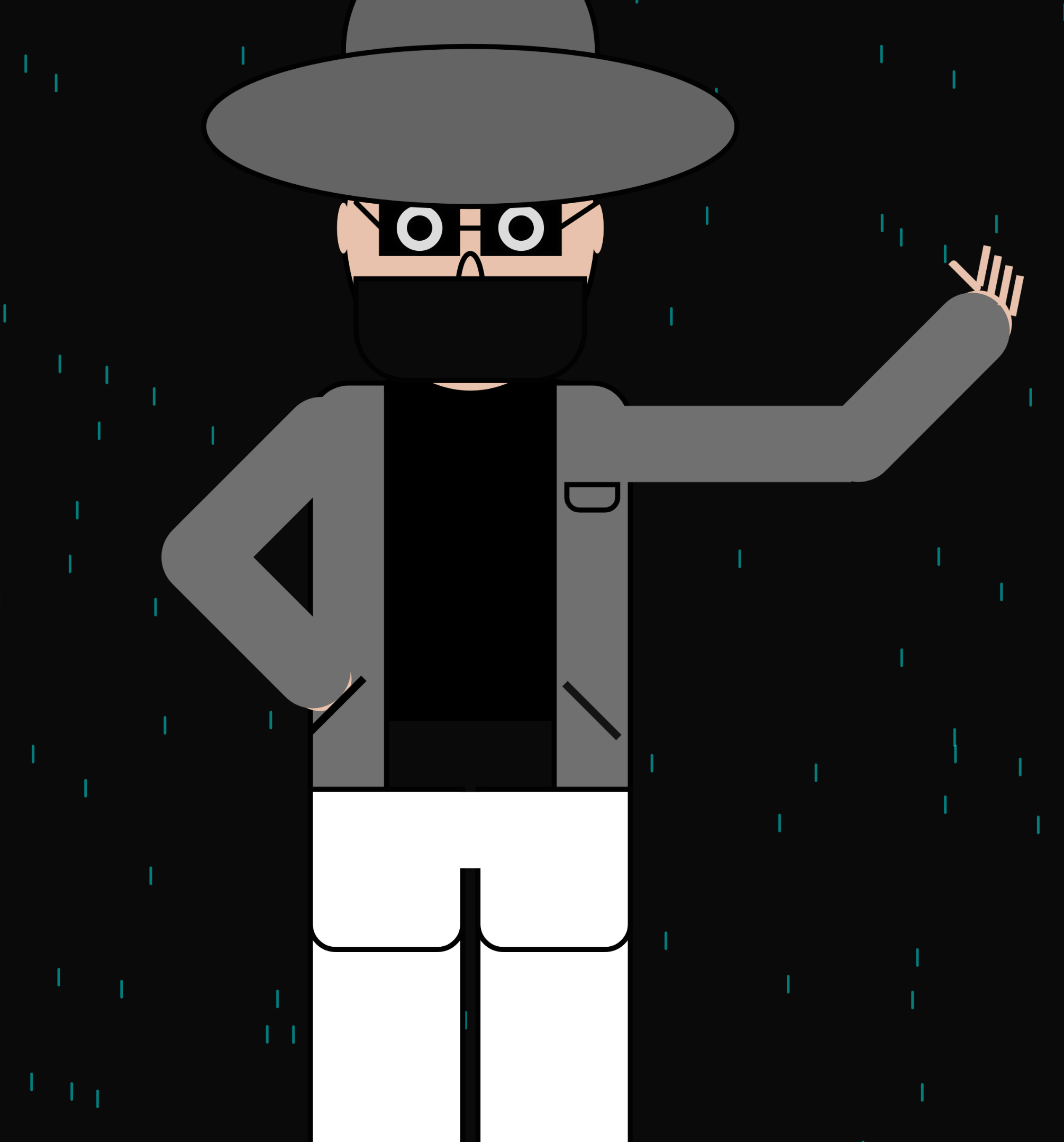
The sketch includes animated rain, interactive portrait, and Dynamic Typewriter Text.

function drawRain() {
  stroke(0, 255, 255);
  strokeWeight(2);
  for (let drop of rain) {
    line(drop.x, drop.y, drop.x, drop.y + 12);
    drop.y += drop.speed;
    if (drop.y > height) {
      drop.y = 0;
      drop.x = random(width);
    }
  }
}

The combination of visuals, interactivity, and sound was a technical challenge but creates a unified, immersive experience.

Screenshot

The Potrait

For the remaining screenshots, I am leaving them out of the post so that they can discoverd along with their sounds in the sketch

Challenges & Lessons Learned

Building this project was a journey in itself. I ran into mutlpiple issues  like assets failing to load, the portrait wouldn’t render properly in fullscreen, and the rain would appear but stay static  I solved these by:

  • Ensuring preloading of images and sounds with reasonable file sizes. I found out that p5,js doesn;t let me upload files wiht more tha 5mb so i had to look for small loopable audios instead of voiceovers
  • Using relative positioning and scaling for the portrait and body parts. I didn’t considered this to be a problem but when I had a few constant moving elements i.e. rain and typewriting. I had to fix it by keeping track of orignal window size

Areas for future improvement:

  • Animated transitions
  • Custom portrait illustrations
  • Additional hover and sound effects
  • Expand body part descriptions with deeper storytelling
AI Usage

AI partiulary helped in developing my potrait. I helped me keep track on of my origin point as I have used multiple rotations init. I believe I could achieve the same reuslt by hit and trial but that would have consumed a lot more time. Another place where AI was helpful was the additon of neon panel. It added a major asthetic to the project. lastly I tried using AI to add comments but they were mostly generaic and self explanatory from the code. So, I decided to leave them out. Generally I didn’t use AI to write a lot of code for me but keep track of the moving elements. As shifting screen sizes did prove to be a challenge. Most cases I noticed that I have been using a lot of variable to keep track of previous states but AI came up with calculations like

typewriterText(intro, windowWidth/2-100, windowHeight*0.3, windowWidth*0.4, LEFT);

to save memory. This did add on to the tidiness of code eventually

Conclusion

This project is both technical and artistic; a small interactive narrative exploring human form, identity, and emotion. Each element, from clickable body parts to typewriter text, contributes to a cohesive experience. The goal was immersion: to make the user feel like they are interacting with a living digital system rather than a static sketch specially with sounds and texts.


Midterm Project – The Grove

1. Sketch and Code

2. Concept

I wanted to make something that felt more physical than most browser games. The idea was simple: instead of clicking a button and having a resource appear, you actually go and get it. You walk to the river to fill a bucket. You dig in the forest and carry the clay back. You hold your mouse on a pottery wheel until the shape changes. The whole game is built around making you move between spaces and handle things directly, rather than managing numbers in a menu.

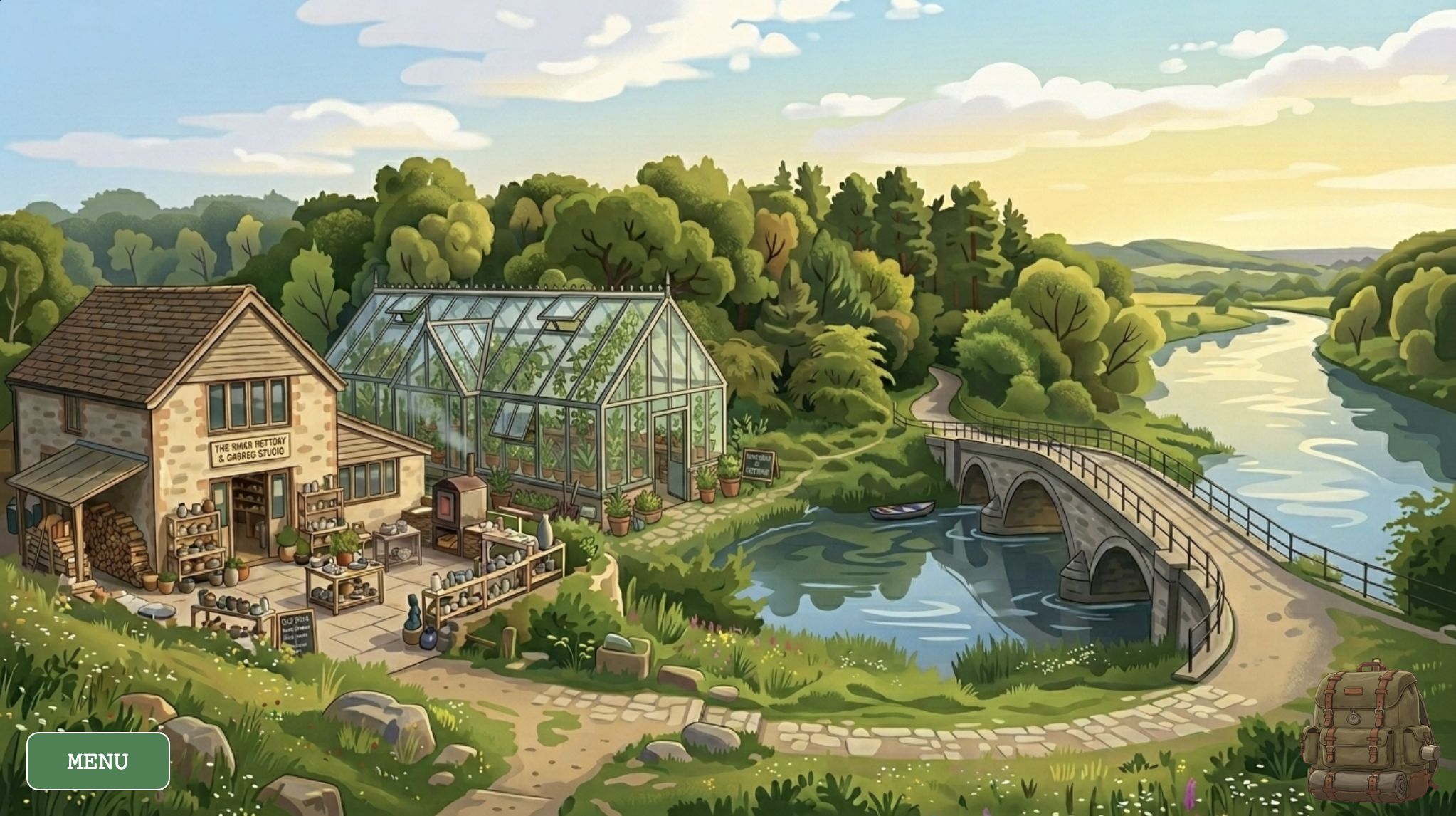
The game has five locations — a world map, a river, a forest, a pottery studio, and a greenhouse — each with its own interaction logic and its own music track. You start with five seeds and no other resources, and the loop is: collect clay and water, make a pot in the studio, bring it to the greenhouse with soil and a seed, and wait for the plant to grow. The cursor changes depending on where you are and what you’re carrying, so you can always tell what you’re holding without opening an inventory screen. The visual style came from wanting it to feel lo-fi and cozy, loosely inspired by games like Stardew Valley but much smaller in scope.

The world map – each region is a hand-mapped pixel boundary
3. How it Works

The entire game runs on two parallel state variables stacked on top of each other. gameState controls the meta-level — which screen the player is on (title, instructions, gameplay, or pause). currentLayer controls the world-level — which physical location the player is standing in. Every frame, the draw() loop reads both and routes rendering and input accordingly. This separation means that pausing the game, for instance, simply renders the pause menu on top of an already-drawn scene without tearing anything down. A new layer can be added to the game without touching any existing screen logic.

Navigation between scenes is handled by a rectClick() helper that checks whether the mouse landed inside a manually defined pixel rectangle. The world map coordinates were discovered by logging mouseX and mouseY to the console while clicking over the background image — a reliable form of coordinate mapping. Two rectangles per scene allow irregular regions of the map to be approximated without any polygon math.

/*
 * Detects which map region was clicked and navigates to that layer.
 * Regions are defined as bounding rectangles over the map background art.
 */
function checkMapClick() {
    if (rectClick(0, 190, 260, 470) || rectClick(240, 330, 380, 430)) {
        currentLayer = "STUDIO";
    } else if (rectClick(240, 200, 500, 260) || rectClick(300, 260, 510, 360)) {
        currentLayer = "GREENHOUSE";
    } else if (rectClick(260, 110, 780, 200) || rectClick(520, 200, 780, 290)) {
        currentLayer = "FOREST";
    } else if (rectClick(525, 365, 840, 450) || rectClick(790, 215, 1025, 450)) {
        currentLayer = "RIVER";
    }
}

Plants must keep living regardless of which scene the player is viewing. They are stored in a global activePlants array and updated on every frame via updateGlobalPlants(), called unconditionally at the top of draw(). This means a seedling keeps aging while the player is away collecting water at the river. Growth is tracked using millis() rather than frameCount, making it completely frame-rate independent.

// Called every frame; promotes the stage when enough time has passed. 
update() {
    let age = millis() - this.birthTime;
    if (age > this.growthDuration && this.stage < 2) {
        this.stage++;
        this.birthTime = millis();          // Reset timer for the next stage

        // Play the "fully grown" sound once
        if (this.stage === 2 && !this.hasPlayedGrowthSfx) {
            sfxGrowing.play();
            this.hasPlayedGrowthSfx = true;
        }
    }
}
4. Technical Decisions
The Pottery Wheel — Hold-to-Craft

The most deliberate design decision in the project was rejecting an instant “Make Pot” button in favor of a hold-to-craft interaction. The pottery wheel tracks how long the player’s mouse has been in contact with it and advances a shapingFrame counter every five seconds, visually pulling the clay through four distinct silhouettes. During contact, a looping wheel sound plays and the pot sprite is mirrored horizontally on alternating frames to suggest rotation. Release the mouse and the sound cuts immediately — the wheel stops the moment you lift your hand. The entire sequence takes fifteen seconds of sustained attention, which is long enough to feel like real effort and short enough not to become tedious.

// ── Pottery Wheel ──
if (wheelState !== 'EMPTY' && !isDraggingFromWheel) {
    let isTouching = mouseIsPressed && dist(mouseX, mouseY, wheelX, wheelY) < 70;

    if (wheelState === 'SHAPING') {
        if (isTouching) {
            // Keep wheel sound looping while the player holds the wheel
            if (!sfxWheel.isPlaying()) sfxWheel.loop();

            // Advance the pot shape frame every 5 seconds of contact
            if (millis() - shapingTimer > 5000) {
                shapingFrame = min(shapingFrame + 1, 3);
                shapingTimer = millis();
            }
        } else {
            sfxWheel.stop(); // Stop sound when mouse is lifted
        }

        // Once fully shaped, transition to draggable state
        if (shapingFrame === 3) {
            wheelState = 'READY_TO_DRAG';
            sfxWheel.stop();
        }
    }

    // Draw the pot on the wheel, mirroring every 10 frames to suggest spinning
    push();
    imageMode(CENTER);
    translate(wheelX, wheelY);
    if (wheelState === 'SHAPING' && isTouching && frameCount % 20 < 10) scale(-1, 1);
    drawPotFrame(0, 0, shapingFrame, 200, 200);
    pop();
}
The Furnace — Time as Stakes

Once a shaped pot is dragged into the furnace, a four-phase timer begins. There is a ten-second window to retrieve a perfect pot, then a five-second grace period where the pot is visibly burnt but still removable (though broken), then five more seconds before it crumbles to ash entirely. This makes the act of pot-making carry real risk: leave the studio to collect other resources and you may return to nothing. The time-management tension it creates between the furnace and the wider world loop was a late addition to the design, but it became one of the most important decisions in the whole game — it’s what makes the studio feel dangerous rather than merely mechanical.

// ── Furnace ──
if (furnaceState !== 'EMPTY' && !isDraggingFromFurnace) {
    let elapsed = (millis() - furnaceStartTime) / 1000; // Seconds since firing started

    if (elapsed < 10) {
        furnacePotFrame = 3;
        furnaceState = 'FIRING';
        if (!sfxFurnace.isPlaying()) sfxFurnace.loop();
    } else if (elapsed < 15) {
        furnacePotFrame = 4;
        furnaceState = 'READY_TO_DRAG'; // Pot is done — player can pick it up
        sfxFurnace.stop();
    } else if (elapsed < 20) {
        furnacePotFrame = 5;
        furnaceState = 'BURNT'; // Left too long — pot is cracked
    } else {
        furnacePotFrame = 6;
        furnaceState = 'ASH';  // Completely destroyed
        sfxFurnace.stop();
    }

    imageMode(CENTER);
    drawPotFrame(205, 237, furnacePotFrame, 70, 70);
}
The Cursor as a Physical Inventory

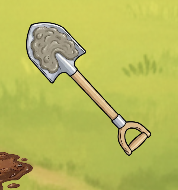
Rather than displaying abstract resource counts in a HUD panel, physical resources are communicated directly through the cursor. In the forest, the shovel sprite changes to show clay or soil clinging to the blade the moment something is dug up. At the river, the bucket visually fills. Resources are deposited by carrying them to the backpack icon in the corner — the act of storing something is the same gesture as moving it there.

Bucket cursor fills visually after clicking the river surface
Cursor becomes a clay-caked shovel after digging a deposit
5. Challenges
Double-Firing Buttons

The most persistent bug in the project was button clicks firing twice from a single physical interaction. p5.js triggers both mousePressed and mouseClicked in sequence for the same click event, and because several buttons triggered state changes or inventory mutations, the same action would execute twice — opening and immediately closing the inventory, or incrementing a counter twice in one tap. The fix was a lastMenuClickTime debounce guard: every button action stamps the current timestamp, and any input arriving within 250 milliseconds of that stamp is silently discarded. Setting mouseIsPressed = false inside the button handler also “eats” the event before any downstream listener can see it.

// Fire the action on click, preventing double-firing with a debounce timestamp
if (hover && mouseIsPressed) {
    sfxButton.play();
    lastMenuClickTime = millis();
    mouseIsPressed = false; // Consume the press so nothing else reacts to it
    action();
}
The Cursor Bleeding Over UI Buttons

A subtler issue emerged from the custom cursor system: the shovel and bucket sprites would remain active when hovering over the “Return to Map” and “Menu” buttons in the forest and river scenes. This made the buttons feel broken — the system’s hand cursor never appeared, and the sprite image obscured the button labels. The fix required duplicating the button bounding-box logic inside drawCustomCursor() and explicitly reverting to cursor(ARROW) whenever the mouse entered a UI button’s region. It’s not the most elegant solution, since the same coordinates appear in two places, but it is simple, clear, and reliable.

6. Areas for Improvement

The most obvious missing layer of feedback is what happens when a planting action fails. If the player clicks a greenhouse slot without the right resources, nothing happens. A brief wobble on the backpack icon or a soft error tone would communicate the missing ingredient without interrupting the lo-fi calm. The furnace has the same problem: because there is no visible countdown, the “BURNT” outcome surprises players on a first run through the studio. A subtle color shift on the furnace door as elapsed time crosses into the danger zone would be enough to telegraph urgency without resorting to a numerical timer on screen.

Structurally, the game currently has no win condition or narrative arc beyond the resource loop itself. A concrete goal — growing five plants to full harvest, for instance — would give the loop a sense of closure and make the opening seeds feel like the start of something rather than an arbitrary starting point. Beyond that, the pottery wheel’s hold-to-craft timer could become adaptive: longer contact for a more durable pot, shorter contact for a fragile one that breaks after a single use. That single change would introduce meaningful trade-offs to what is currently a single fixed path through the studio, without adding any new systems

On the technical side, every scene coordinate in the codebase is a hard-coded pixel value sniffed by hand from a 1024×576 canvas. If the canvas size ever changes, every boundary needs to be remapped manually. Normalizing all coordinates to proportions of width and height and then multiplying at render time would make every scene scale to any canvas size automatically — a straightforward refactor that would future-proof the entire coordinate system.

6. Resources
Inspiration

Some of the interaction design was also influenced by this p5.js sketch, which was linked as an example and I came across while exploring what direct, hands-on interaction could look like inside a browser canvas.

Libraries
    • p5.js (v1.11.11) — core rendering, input handling, and sprite-sheet animation via image().
    • p5.SoundloadSound(), loop()setVolume(), and isPlaying() for all BGM cross-fades and per-action sound effects.
Visual Assets
    • All backgrounds, sprites, and sprite sheets were generated using Google Gemini and subsequently edited by hand — cropped, trimmed to transparency, and sliced into equal-width frames for use with p5’s source-rectangle API.
Audio
    • All audio is managed through p5.Sound. BGM transitions are handled by manageBGM(), which compares a targetBGM reference against currentBGM each frame and only swaps when the target has changed — preventing the track from restarting on every draw call.
    • Background Music — each location in the game has its own assigned instrumental track, chosen to match the mood of that space:
      • Main Menu               Supernatural               NewJeans
      • Instructions             ASAP                               NewJeans
      • Map                             The Chase                     Hearts2Hearts
      • River                           Butterflies                     Hearts2Hearts
      • Forest                         Ditto                                NewJeans
      • Studio                        Right Now                     NewJeans
      • Greenhouse             OMG                                NewJeans
      • Pause Menu             Midnight Fiction        ILLIT
    • Sound Effects — all SFX (wheel spinning, bucket fill, shovel dig, furnace fire, etc.) were sourced from Pixabay and other royalty-free libraries.