
Since I don’t have that much time this week (staying with my Aunt means I do, in fact, need to go see all of her Cricket matches and record them), my reading responses are going to be significantly shorter than usual… sorry!
Her Code Got Humans On The Moon
- Looking at the Artemis II mission is making me a bit sentimental.
- Also she’s so cool, her programming job at MIT was a temporary thing… what…? And accidentally invented the concept of software engineering…?
- Lauren once simulated playing astronaut and crashed it by hitting the wrong program, and then it got flagged as a real risk. Then, NASA said astronauts wouldn’t do that… and… well…
- This reading was pretty self-explanatory and easy to understand so I don’t. have anything to say which would not clash with the reading’s text, but she’s really, really cool. I was contemplating double majoring in IM and Mathematics and I think this confirmed it for me. 🙂
Emotion & Design: Attractive things work better
- I would like to see all of his teapots… and why would he buy them if they weren’t that functional… Why would you make a Carelman pot impossible to use? What is the actual function of a tea pot? What makes a teapot desirable? Why would you buy a teapot that makes you work harder than you should? He uses all of these teapots too… (actually mood makes sense…)
- “Usable but Ugly” does make sense. Would I rather have a cup that looks cute and takes me a bit longer to finish, or a cup that takes me very short to finish but looks really ugly? What if you find a solution that’s cute but also works well?
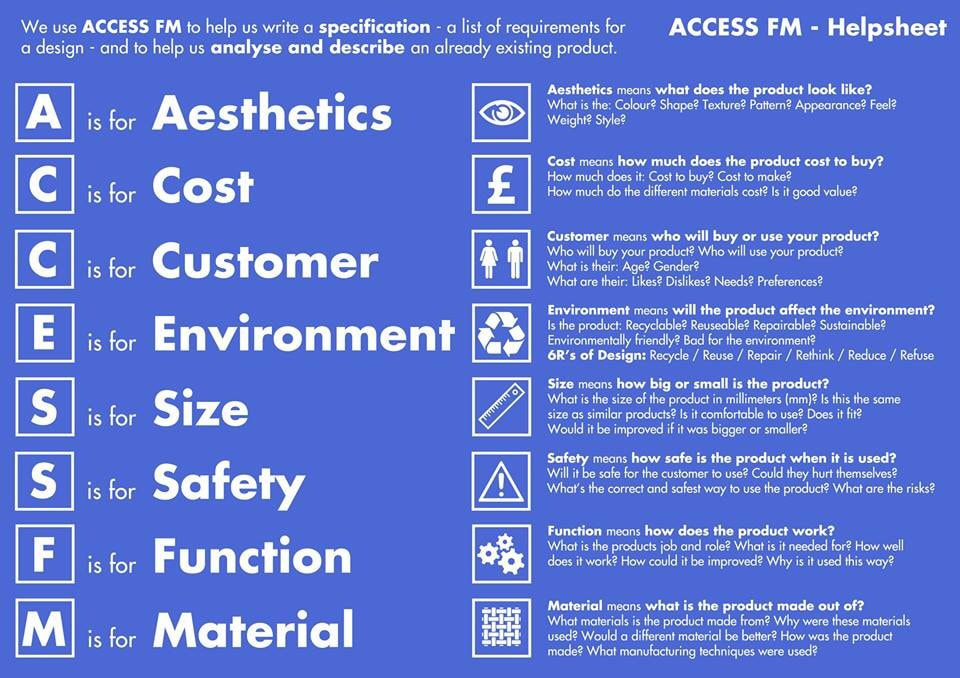
- In MYP Product Design, we learnt about ACCESSFM when designing anything, which featured A(ccessibility) and F(unctionality). Why do we think we can compromise on either when we can find a solution that fits both at once? People DO judge books by their covers, so we should work towards that.
- Psychology is everywhere! You study what people like to make a product that they will use. I didn’t know we had a judgemental system that tells us what’s good or bad, so it’s cool how you can literally trigger positive affect by pleasing design. Pleasing design makes you feel more creative while negative design makes you focus less on the design and more on the contents. That’s probably why important signs are very basic.
- There’s three levels – visceral (does it look/feel/sound good instantly), behavioral (is it actually usable) and reflective (what does owning this mean to me, what does it say about me). I never thought about the third one consciously.
- Norman wrote The Design of Everyday Things (yay!) and then admitted that he wrote it too focused on logic and missed the emotional side completely, and then wrote this to fix it HAHAHA.
- I guess TL;DR is that pretty and functional are not opposites… and nice-looking things do perform/get treated better. That’s literally also how it works with people as well (unfortunately).