Week 2 – Reading Reponse

Watching Casey Reas’ talk influenced the way I think about randomness in interactive artwork. It made me reflect on how, in traditional art, we often try to control every aspect of every element. I typically do not plan every aspect of my own art pieces; sometimes I go with the flow, and sometimes I see where my thoughts take me. However, Reas’ discussion of “systems” rather than “images” challenges my creative process.

This raises the question of when computational art is truly random, or whether it is our own thoughts and decisions that contribute to the apparent randomness of the work. I wonder how much control I actually have over “chance” in a digital system and whether the unpredictability is generated by the algorithm or by the choices I make in setting up the system. This makes me reconsider the balance between control and randomness in creative processes.

So, I want to say that randomness is still a type of control because I think we will never achieve full randomness. This is evident in chaos theory: in a small picture, it looks chaotic, but as we zoom out to see the full picture, it becomes more evident that it is a longer form of a pattern, more complex, yet there is still some type of control.


Reading reflection

Watching this talk, what came to my mind was how deeply rooted the tension between chaos and order is in both art and human history. I found myself reflecting on how, for centuries, artists were expected to create structure and clarity in response to a world perceived as chaotic. This made sense within a Newtonian worldview, where the universe felt stable, predictable, and governed by clear rules. As the speaker moved through moments of scientific disruption and historical trauma, especially the impact of World War I, I began to see how those events made strict order feel insufficient. It became clear to me that the shift toward chance and randomness in art was not a rejection of meaning, but an attempt to better reflect the uncertainty and complexity of lived experience.

What struck me most was the idea that chance is never truly blind. As I watched the examples of algorithmic and generative work, I kept thinking about how these systems are carefully designed yet allowed to behave unpredictably. This balance between control and surrender felt deeply human to me. I realized that using randomness is not about giving up responsibility as an artist, but about trusting processes to reveal patterns that cannot be forced. In that sense, chaos becomes a collaborator rather than a threat. It allows art to remain alive over time, continuously changing while still holding a coherent identity.

Week 2- Generative Art


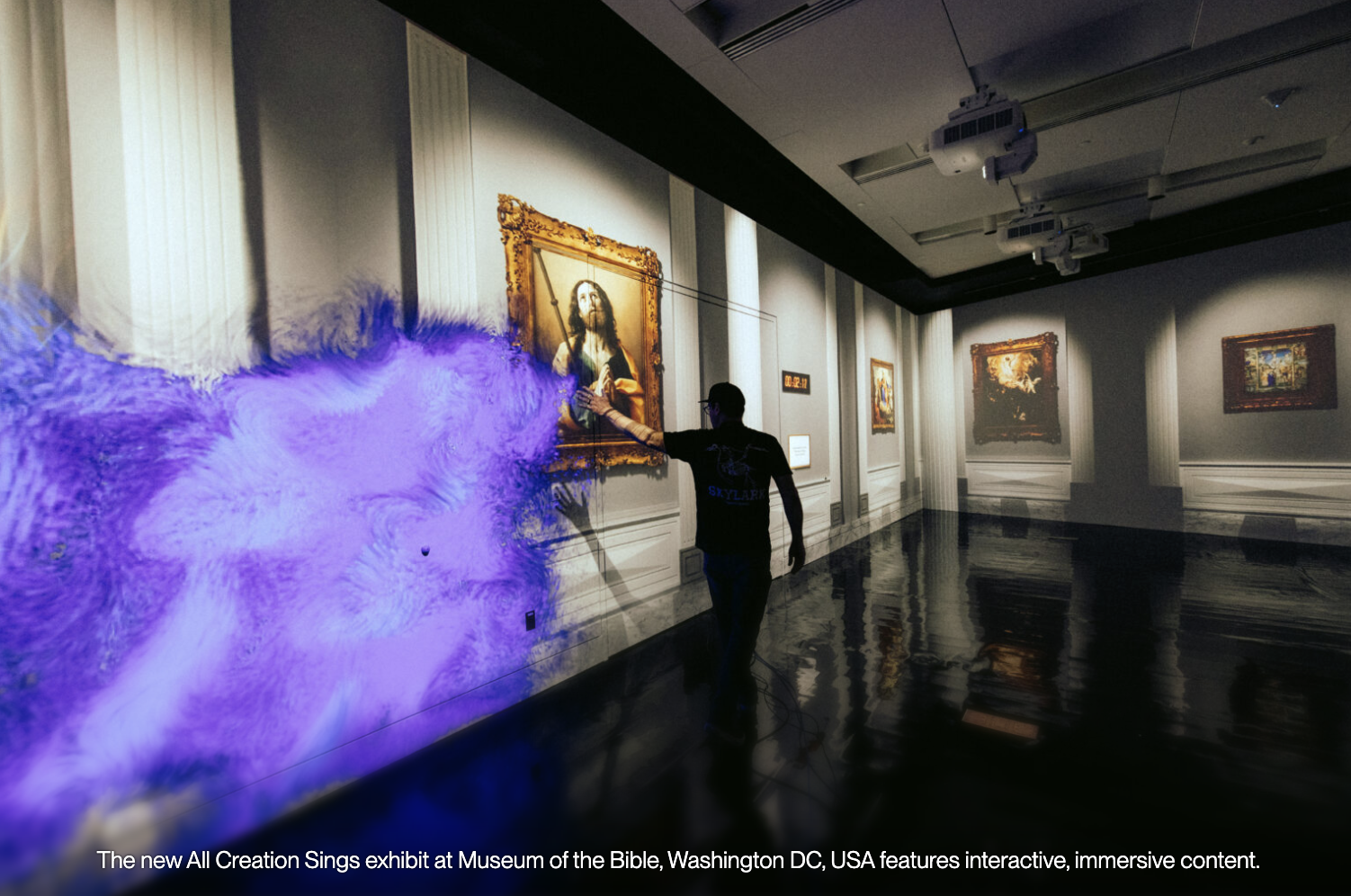
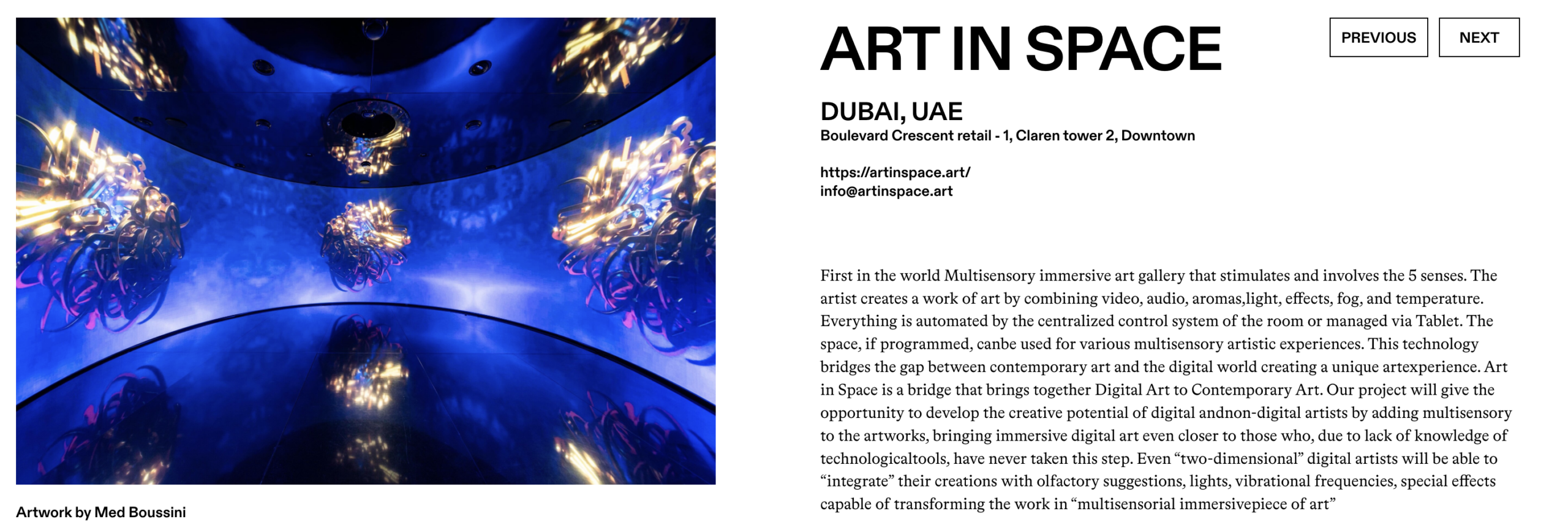
My concept draws inspiration from the interactive projections often seen in galleries and museums. As I mentioned in my previous post, I wanted to include an interactive art piece that allows the audience to both enjoy and engage with it.

I used ML5.js documentation and example for my source body segmentation used in my code.

A highlight of some code that you’re particularly proud of:

let bodySegmentation;
let video;
let segmentation;
let options = {
maskType: "person",
};

function preload() {
bodySegmentation = ml5.bodySegmentation("BodyPix", options);
}

function setup() {
createCanvas(640, 480);
// Create the video
video = createCapture(VIDEO);
video.size(640, 480);
video.hide();
bodySegmentation.detectStart(video, gotResults);
}

function draw() {
background(255);

// Draw the video
image(video, 0, 0);

if (segmentation) {
// Load the pixels of the mask to check each pixel
segmentation.mask.loadPixels();

This part of the code taught my a lot about body segmentation, and how interactive projections work form behind the scenes.

Embedded sketch:

Note: For it to work, please click the link and allow camera access.

Reflection and ideas for future work or improvements:

I am happy that I learned how to use ML5.js, and I look forward to using it in future projects. For this project, I would like to implement more details, using something like FaceMesh, which could affect the shape or color depending on your visible motions.

Week 2: Reading Reflection

Upon watching Casey Reas’ talk, I became interested in his approach of using artificial, computation processes to create something that feels “organic,” as he says. Another thing that resonated with me was when he mentioned how he was more interested on the paths that elements were taking while moving rather than on their individual location at specific moments. I plan on keeping these two features in my mind for my future works. I want to apply this thinking by designing systems where the journey and behavior of elements matter more than their fixed positions, letting randomness guide their movements while maintaining an intentional overall direction or purpose, and create something with that “organic” feeling, where the work doesn’t look rigidly programmed but instead has a natural, living quality to it.

I think the optimum balance lies in incorporating random elements by establishing controlled boundaries while allowing freedom within those constraints.  Simply put, controlling where something can exist or move, but letting how it moved or which specific direction it takes to be determind by chance. There would be a defined space or ruleset but then letting randomness operate freely within those parameters. In this way, everything still feels intentional and cohesive because it’s all happening within a thoughtfully designed framework.

Assignment 2: From Chaos, there is Order.

“One must still have chaos in oneself to be able to give birth to a dancing star.” — Friedrich Nietzsche

Concept:

For this assignment, I decided to go for a feel about how I view life. In my opinion, I view life as quite chaotic and we feel like we don’t have really any control over it. But at some point, we stand back and stop for a moment to get our life in order. We do this from scheduling, persistency in our work and even making sure that nothing will surprise us. But no matter how much we try, there will always be even a little bit of chaos in order. Which is why the piece below represents that very feeling.

How it’s made:

This actually partially uses some code from my last assignment, namely the random ellipses going around in different directions. It uses a simple for loop, that constantly iterates a random color for the ellipses and they are placed randomly on the canvas. I’ve made it so they are smaller as if I made them bigger they would be more dense and you practically can’t see much.

That in itself is meant to represent chaos. There’s no specific order or movement that the ellipses follow, no specific size they must have and no specific color they need to embody. To me, this represents pure chaos.

But I then wanted to represent the logic and order our lives embody so I thought the best to do that, was to get the ellipses under control. I was thinking about what’s the best way to represent order and I thought:

“To make order from chaos, there needs to be a base line structure to follow.”

Wait, a line? Yeah that could work. But to actually showcase more ellipses I needed to make a 2×2 made only from ellipses. So I tapped in to some coding knowledge from before and made a nested for loop.

A highlighted bit of code I’m proud of:

I really like the nested for loop that I made to represent order. It takes in the length and width of the canvas, and sorts out the ellipses in rows and columns. It’s quite simple honestly when you think about it. Also I made sure to move them a bit down so they don’t stick to the walls of the canvas.

if (pause == true){
    background(255)
    for (let i = 0; i < widthCanvas; i = i + 50){
      for (let n = 0; n < heightCanvas; n = n + 50){
        fill(random(255), random(255), random(255), random(255));
        ellipse(i + 25, n + 25, random(50));
      }
    }
  }

But I thought more in adding a bit more to this. Of course, order can be easily represented with rows of ellipses in the same color. But I feel as though, no matter how much order exists, there’s still a little element of chaos inside.

Which is why, I made it so the ellipses have different color, and different sizes, but still in line with the order created. To me, it represents just that still a little bit of chaos can exist.

Reflection:

I enjoyed making this simple effect. Originally I wanted to be ambitious and go for an effect where if I click the mouse at a certain point in the canvas, then all of the circles would come towards the mouse. And when the user would let go, they would go back to the random movements. Unfortunately I struggled and couldn’t think of a way to go about it.

But that’s not to say that this wasn’t good. I think giving it more time to thinker and play around, perhaps someday I could make it have cool animations and effects.

Week 2 – Creative Reading Megan

Casey Reas Eyeo talk on chance operations

How are you planning to incorporate random elements into your work? Where do you feel is the optimum balance between total randomness and complete control?

Before answering this questions, I wanted to implement by myself the concepts the video was talking about. Randomness. One quote by Casey Reas really stayed with me: “change it by a little so that movement creates chaos in an ordered way.” And I think that perfectly represents what I was trying to do in my work. The things I changed to create this element of randomness were data, small pieces of data that might seem insignificant at first, but machines are built based on that, so even the smallest thousandth can make a difference.

This brings me to another quote from the video, about Dadaism: “Dada wished to replace the logical nonsense of the men of today with an illogical nonsense.” To what point is something considered logical? Computers are supposed to be based on pure logic. And yet, artists find ways to turn that logic into illogical sense. And yet, it still has meaning. It’s like deconstructing the logic embedded in the machine with the purpose of illogically creating something that has meaning behind it. Or the other way around, creating something without meaning by using the logic of the computer. Either way, I feel this can be applied to the artworks shown in the video.

A quote by Gerhard Richter captures this idea very well: “Above all, it’s never a blind chance; it’s a chance that is always planned but also always surprising.” These artists construct from chance as a base. It’s about bringing in disorder that has been curated with intention, in a way that even surprises the artist themselves. I think that finding this balance between total randomness and complete control is about using logic and repetition, patterns and algorithms that allow you to repeat a process, while the outcome is completely different, but the essence of it remains present.

Something that really caught my attention in the video was the idea of the million random digitized values and the 1,000 normal deviates. It honestly amazed me to think about the power, the expectation, and the importance that randomness has in our lives when we understand that art imitates or simulates the real world, and the real world is chaotic and not curated by anyone, but rather filled with randomness. Without a doubt, this video and this work opened my eyes and helped me understand even better the importance of chaos within order, and order within chaos.

WEK 2 Art Exploration

Concept

Digital Terrain is a generative artwork inspired by the golden age of computer graphics from the 1970s, when plotters and early systems created mesmerizing patterns through mathematical precision. The piece explores repetition with variation

The composition uses a 6×5 grid structure where each cell contains one of five distinct generative patterns: vertical lines that breathe, organic blob contours, flowing topographic lines, mixed pattern cutouts, and drifting wave forms. The aesthetic echoes vintage plotter art with its warm cream lines on deep black, while the subtle animations bring a meditative, living quality to the static grid.

The work question: How can repetition avoid monotony? Each viewing reveals new relationships between adjacent cells, creating an ever-evolving visual conversation.

Code Highlight

I am particularly proud of the organic blob generation using Perlin noise mapped to polar coordinates. This technique creates smooth, natural-looking shapes that feel hand-drawn rather than computer-generated:

function drawOrganicBlob(w, h) {
  let offsetX = random(1000);
  let offsetY = random(1000);
  
  // Map circle to noise space for organic shapes
  beginShape();
  for (let a = 0; a < TWO_PI; a += 0.1) {
    let xoff = map(cos(a), -1, 1, 0, 2);
    let yoff = map(sin(a), -1, 1, 0, 2);
    let r = map(noise(offsetX + xoff, offsetY + yoff), 0, 1, w * 0.15, w * 0.4);
    let x = w/2 + r * cos(a);
    let y = h/2 + r * sin(a);
    curveVertex(x, y);
  }
  endShape(CLOSE);
  
  // Nested contours for depth
  let numContours = floor(random(2, 5));
  for (let c = 0; c < numContours; c++) {
    let shrink = map(c, 0, numContours, 0.9, 0.3);
    // ... creates inner rings
  }
}

By converting circular motion (cos(a), sin(a)) into noise coordinates, we get perfectly smooth blobs that change shape naturally. The nested contours add depth, mimicking topographic maps or growth rings. This marriage of geometric precision and natural randomness captures the essence of generative art.

Live Sketch

Interaction: Click canvas to regenerate | Press 'S' to save artwork

Reflection & Future Directions

This project taught me how loops transform code into art. Instead of drawing one shape, a loop draws hundreds with variations. The challenge was balancing randomness with aesthetic coherence.

The animation addition was particularly enlightening. At first, I had everything static (noLoop()), but adding a time dimension (t += 0.008) brought the piece to life.

Ideas for Future Work:

  • Color Evolution: Slowly shift the color palette over time, transitioning from cream to blues to warm oranges, creating day/night cycles
  • Audio Reactivity: Use microphone input to make patterns respond to sound. For example, wave amplitude increases with volume, blobs pulse with bass frequencies
  • Cell Communication: Let adjacent cells influence each other's patterns, creating waves of change across the grid rather than isolated behaviors
  • Export System: Generate high-resolution (4000×3000px) versions for actual printing/framing, exploring the digital-to-physical art transition
  • 3D Depth: Add subtle shadows or perspective to create the illusion that some cells are recessed or raised, adding architectural dimension
  • Pattern Memory: Track which patterns appear most frequently and gradually reduce them, ensuring ongoing visual freshness even across long gallery displays

Created with p5.js | February 2026

Week 2 – Generative Art Megan

Concept

“The whole universe is based on rhythms. Everything happens in circles, in spirals.” — John Hartford

The idea of my artwork was that I wanted to create a spiral using the colors of the flower often called the “national Bolivian” flower, the kantuta. This flower is one of the most amazing ones, not only because of its vibrant colors, but also because it grows up to 3,800 meters above sea level, in its native land in the Andes. This flower has a lot of meaning for me, starting with its colors red, yellow, and green, which are those of the Bolivian flag, and also because it represents the nature and resilience of my home country.

Speaking of nature, I wanted to represent this flower through some kind of shape. Spirals are a shape that is found everywhere in nature and, for me at least, they are mesmerizing to look at and to understand. Inspired by the video we watched on randomness in digital art, I wanted to find an “organic” yet “random” way of showcasing the kantuta. The spiral has movement and flow without breaking its structure or bringing chaos. Moreover, it has such a unique presence, it almost calls the viewer to follow its path, and it feels like you’re watching something alive.

That’s why, and as I promised myself in the last exercise, I wanted to challenge myself, so I looked up many tutorials on how to create spirals in p5.js.

Run it and Click it!

Process

Most of my learning for this project came from these video tutorials on YouTube by Strive Math. First, I had to learn about transformations and translations in p5.js. It has to do with the coordinates in the canvas you’re creating. So, when you translate, you move the entire coordinate plane up, down, left, or right. And when you transform, you’re rotating the entire coordinate plane at an angle that you choose (you must select if the angle will be measured in degrees or radians first). It rotates clockwise if the number is positive and counterclockwise if it’s negative.

With transformations, you rotate the axis around the center point you chose when you did the translation. So, with this, I first learned how to draw a simple circle using these concepts. For example, if I translate the origin so it is right in the middle of the canvas, and I keep making this coordinate plane rotate clockwise while drawing a dot somewhere that is not the origin, the dot will keep moving with the coordinate plane and trace a circle when the coordinate plane completes a full 360° rotation.

This is how the code for that looks (this is no longer in code as such since it was just to practice and understand how it works):

function setup() {
  createCanvas(600, 600);
  angleMode(DEGREES)
}

let angle = 0

function draw() {
  translate(width/2, height/2)
  rotate(angle)
  angle++
  point(30,0)
}

The next step, was to think how this could turn into a spiral. Since the circle shape that I made is actually just a point following a path that is determined by the radius of the circle, if I increase the radius of the circle, and as the point moves more the radius also increases more, this will create a path of a spiral. Therefore now the code will look like this:

let angle = 0
let radius = 0

function draw() {
  translate(width/2, height/2)
  rotate(angle)
  angle+= 31
  radius+= 0.4
  strokeWeight(6)
  point(radius,0)

Now I can control the way the spiral looks by playing with the amount of degrees the angle of the coordinate plane is going to change every time and how wide will the radius of the circle increase be. A small issue with this was that the frame rate of how fast or how slow the points would appear will sometimes be too slow and I wanted to change that. Therefore, just like in the tutorial that i watched, I inserted a for loop to control the frame rate of everything, and for it to not change and save the sate of the canvas I used the ‘push’ and ‘pop’ commands so that the origin always stays in the center of the canvas and doesn’t move every time the for loop repeats.

As I said, I wanted to implement the concept of randomness, so I created random variables for the values of the angle and the radius to be able to make a different spiral every time you click on the screen. To make this happen, I added a mousePressed() function that resets the angle and radius to their initial values, generates new random values for the angle increment and radius increment, and clears the canvas:

function mousePressed() {
  angle = 0;               
  radius = 0;             
  angleValue= random(300, 3000); 
  radiusValue = random(0.009, 0.2);
  background("black");    
}

This way, every time the canvas is clicked, the spiral starts fresh with completely new random parameters, creating a unique pattern while keeping the interaction simple and intuitive. However, it took me a while to figure out this approach, because at first I tried using a boolean variable and a separate restart function in a more complicated way, and my code would get messy: sometimes the spiral wouldn’t appear, or new spirals would overlap with the old ones. Then I realized, why complicate things? I could just reset the main variables and redraw, and it worked perfectly.

Something I did very intentionally was set the limits of the random value of the angle to very big numbers and the numbers of the radius to very small decimals. I did this because I started playing around with those values and I realized the smaller the radius was the more dense the spiral looked and if the angle was a high number there was more chance of there being more ‘spiral lines’. I liked how this looked because it made the spiral look more like a piece of art. I also changed the background color to black so that the colors of the points would stand out more.

Code I am proud of

Then came the most important part: the color of the kantuta image. I uploaded the image to p5.js and made the spiral match the colors of the pixels by randomly selecting a pixel from the image and using its color for each point on the spiral.

let ix = floor(random(img.width))   
    let iy = floor(random(img.height))  
    let c = img.get(ix, iy)             
    stroke(c)

I’m really proud of this code because it wasn’t easy to get it right at first. I had to change the image I was using because the first one had too much black, which blended with the background and made the spiral almost invisible, and it also took too long to load. Then I realized that I needed to extract the colors pixel by pixel from the image, and I did this inspired by the p5.js example of pointillism, where each point takes the color of a random pixel from the image. This finally permited me to have a spiral that not only looked colorful and vibrant, but also represents the kantuta in a way that felt alive and organic, and I really liked it.

Final Code

//Image variables
let img;

//Image upload
function preload() {
  img = loadImage("kantuta.jpg");
}

//==============
//Setup
//==============
function setup() {
  createCanvas(600, 600);
  background("black")
  angleMode(DEGREES);
  frameRate(80);

  angleValue= random(300, 3000)
  radiusValue = random(0.009, 0.2)

  img.loadPixels(); // allow us to access image pixels
}

//Spiral variables
let angle = 0
let radius = 0

let angleValue
let radiusValue

//===================
//Drawing the spiral
//===================

function draw() {
  //To control the frame rate
  for (let i= 0; i<80; i++){
    
  push()//save the state of our canvas
  
  translate(width/2, height/2);
  rotate(angle);
  angle+= angleValue;
  radius+= radiusValue;
  strokeWeight(4);
    
  //Pick a color from the image
    let ix = floor(random(img.width))   
    let iy = floor(random(img.height))  
    let c = img.get(ix, iy)             
    stroke(c)                          
    
   point(radius,0);
  
  pop()//come back to the old state before 'push'
  }
}

// ===================
// Replay spiral on click
// ===================
function mousePressed() {
  angle = 0;               
  radius = 0;             
  angleValue= random(300, 3000); 
  radiusValue = random(0.009, 0.2);
  background("black");    
}

General Reflection

Overall, I think this project taught me a lot about patience, experimentation, and problem-solving. I also realized how important it is to simplify my approach: sometimes trying too many complicated solutions only slows you down, and the best results come from understanding the core idea and working with it directly.

I’m proud of how the final spiral turned out, not just technically but also conceptually. I feel like it feels alive, vibrant, and connected to something meaningful, which reflects the beauty of the kantuta and the creative process behind it. This project was the hands-on reminder of the video we saw that taught me that coding can be as expressive as painting or drawing, and that combining randomness, structure, and careful choices can create something truly mesmerizing.

Reading Reflection – Week#2

Every time I watch or read something about generative art, I feel really privileged because while many artists were trying to create art using limited computers and machines, I now have a laptop that allows me to create art whenever I want. Seeing the machines and codes in the talk made me realize how much effort and experimentation went into early computer art, which makes me appreciate the pieces even more since I know the background and history.
I also enjoy learning about different types of art because it allows me to question what art actually is. Before starting my major in Intro to IM and Understanding Interactive Media, I don’t think I would have considered generative art as “real” art, especially since it is created using code and computers. However, after my first two weeks in the major, I realized that art doesn’t have a fixed technical definition, because everyone perceives and understands it differently.
Casey Reas’ Eyeo talk on chance operations was overwhelming at first since he mentioned many different artworks and ideas very quickly making it hard to keep up. Although toward the end, I started to understand the structure of his approach, first introducing ideas through existing works and then building or continuing algorithms through code. One example that stood out to me was the Century piece, where he goes through 100 different artworks to generate a single evolving result, showing how systems can grow over time.
As someone with OCD, I usually want everything to be organized and controlled so the idea of randomness was never a suggestion to me. However, I realized that randomness can actually add beauty and meaning to art through overlapping shapes and unexpected placements. This way, art to me feels more expressive and story-driven than a perfectly structured piece.
After watching Casey Reas’ talk, I feel inspired to include randomness in my own work. I plan to experiment with random values and frameRate to allow my piece to change and evolve, while still keeping it controlled through specific rules in the code.

Week 2: Loop

Concept:

My concept is to create a simple “inside the hive” scene where order and randomness happen at the same time. The honeycomb background is built from repeated hexagons in a grid, which represents the hive’s structure—tight, organized, and predictable. In contrast, the bee moves with a random flying motion that changes slightly every frame, so it feels alive and spontaneous rather than mechanical. I also made the bee bounce within the canvas so it stays inside the hive space, like it is exploring but still contained by its environment. Also, during the class time when I was thinking about what to draw in the project, I felt really hungry and I want to eat honey cake.


The code that I am proud of:
  // --- Bee motion (random flying) ---
  beeVX += random(-0.3, 0.3);
  beeVY += random(-0.3, 0.3);
  beeVX = constrain(beeVX, -2.5, 2.5);
  beeVY = constrain(beeVY, -2.5, 2.5);

  beeX += beeVX;
  beeY += beeVY;

  // Keep bee inside canvas (bounce)
  let margin = 30;
  if (beeX < margin || beeX > width - margin) beeVX *= -1;
  if (beeY < margin || beeY > height - margin) beeVY *= -1;

  // Draw bee on top
  drawBee(beeX, beeY, 0.35);
}

At the beginning, I wasn’t sure how to create this project, so I watched several YouTube tutorials to learn how to animate an object with “random” speed and changing positions. I borrowed the basic motion idea from those videos, but when I copied it into my own sketch, it didn’t fit well at first because most examples were things like spaceships or tanks, not a bee flying inside a hive. I wanted the bee to feel a little “drunk” and overworked—like it’s been collecting too much honey—so I tried lowering the speed. After that, I ran into another issue: the bee sometimes flew past the canvas boundaries instead of bouncing back. I returned to YouTube to look for a solution, but I couldn’t find an explanation that matched my situation. I then asked ChatGPT, but the first version of the code was too complicated for me to fully understand. In the end, I asked a friend on campus for help, and the final motion code in my project was revised with my friend’s support so it works properly and still matches the bee-in-a-hive idea.

How this was made:

In the beginning, I was frustrated with drawing the honeycomb. My first draft didn’t tile correctly—the shapes overlapped and collapsed into each other, so it didn’t look like a real hive at all. I made many adjustments and learned a lot from YouTube tutorials, especially about changing the way I structured the code so the hexagons could repeat cleanly in a grid. For the color choices, I also struggled because it would take too many trials to find the exact shade I wanted, so I asked ChatGPT for suggestions and used that as a starting point. After the hive finally worked, the next challenge was the bee’s movement, which I mentioned earlier. Once the motion was fixed, I focused on drawing the bee with more detail. The wings and stripes were honestly the hardest parts because small changes in position and size could make the bee look “off.” I spent a lot of time adjusting these details until the proportions felt right and the bee matched the hive scene more naturally.

Conclusion and reflection:

I learned a lot throughout the process of making this project. Compared to the beginning, I felt much more comfortable writing the code to draw the bee, mainly because the self-portrait assignment helped me get used to building shapes step by step and adjusting details. Next time, I think I can improve by creating a more surprising or interesting background and adding more animation—so the scene feels more dynamic rather than just a moving bee on a static hive.