All Posts

Final Project Idea

Concept:

The idea is to create a “Crack The Code Safe Game.” There will be a locked mini safe box that the user will need to open by solving a simple math problem on the computer, revealing a secret 4-digit code.

This inspiration came from watching a video about a similar project: Crack The Code Safe.

Components:

  1. Handmade safe box:
    • This box has a lock controlled by an Arduino.
    • There’s a dial on the box connected to the Arduino that the user will use to enter the secret 4-digit code.
  2. Arduino:
    • The Arduino checks if the entered code is correct.
    • It manages locking and unlocking the safe.
  3. p5.js game interface:
    • It’s a simple math game on the computer screen (p5.js). This game helps the user find the 4-digit code for the safe.

User Experience Flow:

  1. Introduction: The user will receive instructions on how to open the safe, both on the computer screen and the safe box. The safe will have different codes for each new game. The user will be able to restart game. But the user cannot see the correct code without at least making one attempt to open the safe.
  2. Gameplay: The user will start playing the game on the computer. Each correct math problem solution reveals a digit of the secret 4-digit code in order. In other words, the user will solve 4 math problems and the answer to each problem is the digits of the secret code.
  3. Code Entry: The user solve the math problem, get a digit, and enter it using the dial on the safe box. Turn the dial to select digits and push it to confirm each one.
  4. Feedback and Unlocking: The Arduino checks the entered code. If it’s right, the safe unlocks, and the user win! If not, the game starts over, and a new secret code will be created.
Week 11 – Reading Response

Graham Pullin discusses the assistive technology with the respect of aesthetic designs as well as the functionality in the book Design Meets Disability. She talks about the intersection of design and disability, examining how design can be inclusive and accessible to individuals with disabilities.  Importantly, Graham gives a retrospect to how some assistive devices such as glasses have transformed from a mere medical devices to fashionable items and other tensions that exist between design and accessibility. With this, Graham challenges traditional notions of assistive devices and explores the idea that disability should not be viewed solely as a medical problem to be solved but rather as a social and cultural issue that design can address.

For me, this reading is thought-provoking and eye opening. It not only showed me many design examples of daily item, but also inspired me to think about them in the topic of disability. What is so special about disability? How should our designs be adapted to disability? Do they need to look good? Do they need to be simplistic? All these tensions are more complicated when considering the context of disability. Even not in the case of accessibility an disability, the tensions introduced by Graham are worth thinking when concerning good designs. This also reminds me of the previous reading “Do Attractive Things Work Better
. This reading also talks about the relation between aesthetics and functionality. And Graham’s piece seems like an extension to the scope discussed in this reading.  And more significantly, Graham’s discussion reveals an important but usually neglected goal of designs, which is advocating for a more inclusive and accessible world.

Week 11 – Reading

The debate between functionality and design has always been an interesting one, and though sometimes it feels like you can only pick one without compromising both, it is very much possible to accomplish both as what Apple did with the iPod. Though most engineers might argue for the case of functionality, I think one very beautiful part of the shared human experience is that humans appreciate beautiful things like a sunset or a well-designed product. Donald Norman has a teapot that is functionally unusable, yet has a place on his countertop because he likes how it looks. Perhaps not everyone is as invested in design as Donald Norman is, that they would give up all functionality for design, but a case can be made for ‘functional enough’ before people start looking at design. Ten different tote bags are functionally all the same, but there might be one specific tote that a person might gravitate to more often. A tote bag with a hole might not be used because it does not perform it’s function well even if it is well-designed, but other than that, the tote bag that is chosen is the one that suits the dress code the best.

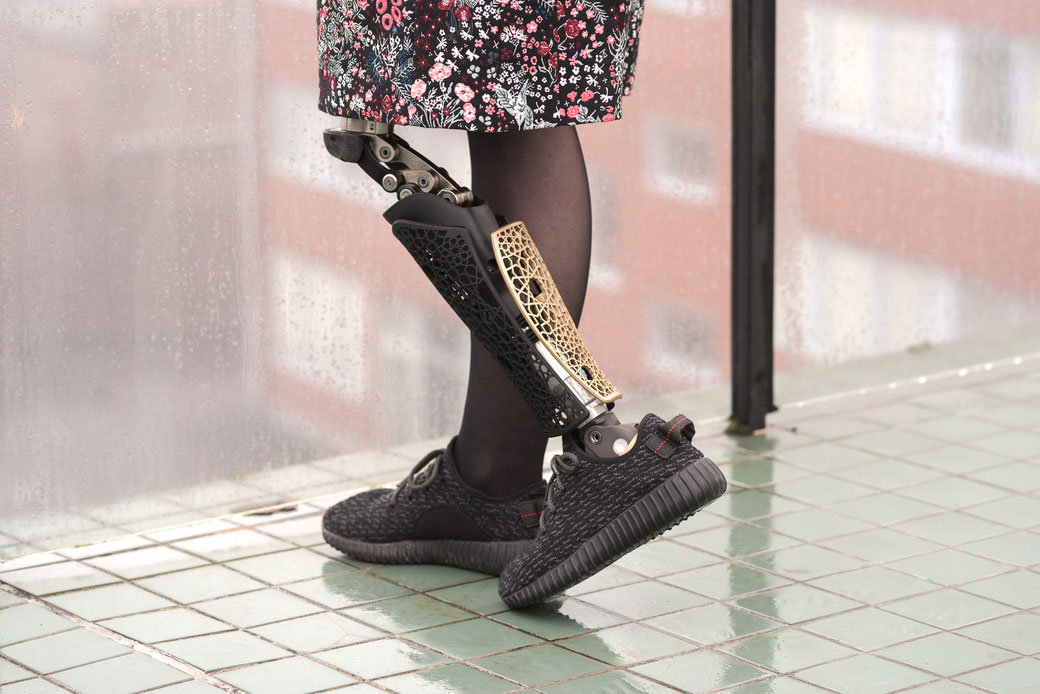
In the case of disability, it is a little strange that design for disability has always been about ‘catching up to a normal human’, and not augmenting them to beyond the capabilities of an average person. Why are leg prosthetics designed to look like bad imitations of flesh, when it could be used as a fashion accessory that able-bodied people are not able to? Why not design hearing aids that can enable superhearing? An able-bodied person is not the standard, and it is always an option to design beyond that, to make disability less of a stigma and instead become something that opens up new possibilities instead of reducing them. Prosthetic covers: Interview with Emelie Strömshed from Anatomic Studios - theactiveamputee

week 11: reading reflection

The reference to Charles Eames really stuck with me. “Design depends largely on constraints” — I think so too. What is good design if not bad design? It is easy to define bad design. It’s a jumble of elements that do not fit together, but forced into a whole that bears a discordant existence. Good design on the other hand, seems harder to articulate, but what cannot be told can be suggested, which seems to be Pullin’s standpoint as he enters the discussion of designing for special needs. Discretion has been appreciated as a design element when designing for disability, but, on the other hand, in the case of eyewear, there is an existing positive image, and so invisibility is not necessarily a consideration here. This is understandable; that every product has a different context surrounding itself and its design should be in accordance. But then Puliln also says, “fashion can be understated, and discretion does not require invisibility.” The discussion that follows illustrates how several parameters interact in defining the constraints of design, and the design of something transcends the thing itself and blends into people’s perception of other, related concepts, as is in the case of the design of eyewear and fashion.

Week 11: Reading Assignment

Professor Goffredo is really good at breaking down good design. At first, when you delve into what makes a design good, it’s all very heady and cerebral. Very meticulous and calculated. But at the end of the day, when you go into what really makes a design good, the reasoning is so shallow. A design is good when it works and people use and like it. A design is bad when they don’t. It reminded me of something Stanley Kubrick said about movies. He said you can think of a million intelligent reasons for why a movie was good or not, but at the end of the day, the only thing that mattered, the only thing that really determined whether it was good or not, was if you liked it. Simple as that. Goffredo is really good at identifying simple human behaviors that drive all of design. And I’ve been surprised at how much I have learnt about myself while studying design.

At first, the world ‘disability’ seems to have really clear parameters. We think of people who have to walk with canes, and our first reaction is to go, “Well, I’m not that. This doesn’t apply to me.” But I think we are all disabled in a myriad of ways. If the goal is seamless social assimilation, I think we all know what it feels like to be an outsider. The same mechanism that keeps us from saying embarrassing things is the same mechanism that drives us to design hearing aids to be as invisible as possible. We don’t want what we’re lacking to be spotted. But there’s a power you reclaim when you choose to own it. One of my favorite Kanye lyrics goes: “I found bravery in my bravado.” And I think designing for disabilities would really benefit from this mindset. We all know what it’s like to feel weird. But then when we embraced what we had once spurned, we discovered that’s where the source of our strength was. Rumi said, “The wound is where the light enters.” A disability is never a disability as the word is understood. A disability is one of the many types of roadblocks we experience being human. We all experience the disabilities of being human in so many different ways. Sometimes, they even incapacitate us and keep us from seeing the beauty in our struggle. The goal of the good designer is to recognize these incapacities and to free us, both physically and mentally. They diagnose the wound, and design something that allows the light to enter. They make what had once been looked down upon desirable. They make what had once made us outcasts into harbingers, icons, and leaders. Disabilities are fertile grounds for growth, change, and beauty. I think if we start approaching disability from this frame of mind, we’ll see the overall soul of humanity much more clearly.

Week 11 – Reading Response

The reading about design and disability really got me thinking. It showed how something as simple as fashion can change how we view things like glasses or other aids for individuals with disabilities. I used to wonder how glasses became a style statement, making people proud to wear them unlike other kinds of devices such as hearing aids. However, I particularly appreciate that the author addresses these devices as earwear and bodywear. They’re just something that people wear like clothes, and those devices hold very sentimental details for the designer, which shouldn’t make the individual feel odd or unusual.

The example of Aimee Mullins is especially an inspiring example that shows how prosthetic legs can be a way to express oneself, which is pretty amazing. It further illustrates how fashion can help designers make special aid devices more normalized and less visible, reducing the stigma of disability.

The main idea that I really liked about this reading is how design can make a huge difference for people with disabilities. Design isn’t just about making things look good; it’s about making life easier and more inclusive for them. Fashion can play a role in making people feel confident about using assistive devices. And when designs are simple, they make life easier for everyone, not just those with disabilities. The idea that simple designs work better, like what Apple does, totally makes sense. Simple things are easier for everyone to use, regardless of age or abilities of individuals. The reading discussed how it’s sometimes better to make designs specifically for one person instead of trying to make something that accommodates everyone.

Week 11 – Production

Teammate: Jiho

1st exercise: 
We used the existing example: Week 11 Bidirectional serial communication(p5js Sketch) to fulfill the 1st exercise. We created a new variable “moveEllipse” to map the alpha value to the canvas width. We then used our variable as the x-position of the ellipse, successfully enabling the ellipse to move from one edge to the other as the potentiometer value increased.

let moveEllipse = map(alpha, 0, 1023, 0, width);
stroke(0);
ellipse(moveEllipse, height / 2, 60);


2nd exercise:
Editing that same example, we added the bouncing ball javascript from p5.js: https://editor.p5js.org/icm/sketches/BJKWv5Tn . The LED becomes brighter when the ball moves towards the right edge of the canvas. Conversely, the LED becomes dimmer when the ball moves towards the left edge of the canvas. We edited the arduino to replace digitalWrite with AnalogWrite to enable the control of the LED brightness.

let x = 320;
let y = 180;
let xspeed = 3;
let yspeed = 2;
let r = 25;

ellipse(x, y, r*2, r*2);
// mapping brightness to canvas width
let rightValue = map(x, 0, width, 0, 255);
right = int(rightValue);

x += xspeed;
y += yspeed;
if (x > width - r || x < r) {
xspeed = -xspeed;
}
if (y > height - r || y < r) {
yspeed = -yspeed;
}
}


3rd exercise: https://youtu.be/YFucULMGidI

I took the main structure of the code from the exercise we looked at in class- where we had to press our spacebar to connect to our board. There, I added the code with the bouncing ball given to us through this link(https://editor.p5js.org/aaronsherwood/sketches/I7iQrNCul).

The approach was to call bounceBall() function once the serial is activated, where p5js will continuously send touch value (1 means it touched the ground and 0 means it’s above ground) to the arduino. In return, the arduino would send lightStatus value (the input read from the light sensor). If the received value is bigger than 500, the wind blows from left to right and right to left if below.

Below are parts of code that highlights the appraoch:
P5js

if (position.y > height-mass/2) {
      velocity.y *= -0.9;  // A little dampening when hitting the bottom
      position.y = height-mass/2;
    touch = 1;
    //////////////////////////////////
    //SEND TO ARDUINO HERE (handshake)
    //////////////////////////////////
    let sendToArduino = touch + "\n";
    console.log(touch);
    writeSerial(sendToArduino);
    touch = 0;
    sendToArduino = touch + "\n";
    writeSerial(sendToArduino);
    }

Arduino

int ledPin = 5;
int lightPin = A1;
int lightStatus;

void setup() {
  Serial.begin(9600);
  pinMode(ledPin, OUTPUT);
  pinMode(lightPin, INPUT);

  // start the handshake
  while (Serial.available() <= 0) {
    digitalWrite(LED_BUILTIN, HIGH);
    Serial.println("0");
    delay(1000);
    digitalWrite(LED_BUILTIN, LOW);
    delay(100);
  }
}

void loop() {
  while (Serial.available()) {
    digitalWrite(ledPin, HIGH);

    int ledLight = Serial.parseInt();
    lightStatus = analogRead(lightPin);
    if (Serial.read() == '\n') {
      digitalWrite(ledPin, ledLight);
      delay(50);
      digitalWrite(ledPin, LOW);
      Serial.println(lightStatus);
      delay(5);
    }
  }
  digitalWrite(LED_BUILTIN, LOW);
}


week 11 – group assignment (maya)

1st exercise: 
We used the existing example: Week 11 Bidirectional serial communication(p5js Sketch) to fulfill the 1st exercise. We created a new variable “moveEllipse” to map the alpha value to the canvas width. We then used our variable as the x-position of the ellipse, successfully enabling the ellipse to move from one edge to the other as the potentiometer value increased.

let moveEllipse = map(alpha, 0, 1023, 0, width);  
//
stroke(0);
ellipse(moveEllipse, height / 2, 60);

2nd exercise:
Editing that same example, we added the bouncing ball javascript from p5.js: https://editor.p5js.org/icm/sketches/BJKWv5Tn . The LED becomes brighter when the ball moves towards the right edge of the canvas. Conversely, the LED becomes dimmer when the ball moves towards the left edge of the canvas. We edited the arduino to replace digitalWrite with AnalogWrite to enable the control of the LED brightness.

//
let x = 320;
let y = 180;
let xspeed = 3;
let yspeed = 2;
let r = 25;

//
  ellipse(x, y, r*2, r*2);
  // mapping brightness to canvas width
  let rightValue = map(x, 0, width, 0, 255);
  right = int(rightValue);
  //
  x += xspeed;
  y += yspeed;
  if (x > width - r || x < r) {
    xspeed = -xspeed;
  }
  if (y > height - r || y < r) {
    yspeed = -yspeed;
  }
}

3rd exercise: https://youtu.be/YFucULMGidI

I took the main structure of the code from the exercise we looked at in class- where we had to press our spacebar to connect to our board. There, I added the code with the bouncing ball given to us through this link: https://editor.p5js.org/aaronsherwood/sketches/I7iQrNCul

The approach was to call bounceBall() function once the serial is activated, where p5js will continuously send touch value (1 means it touched the ground and 0 means it’s above ground) to the arduino. In return, the arduino would send lightStatus value (the input read from the light sensor). If the received value is bigger than 500, the wind blows from left to right and right to left if the value is smaller than 500.

arduino:

int ledPin = 5;
int lightPin = A1;
int lightStatus;

void setup() {
  Serial.begin(9600);
  pinMode(ledPin, OUTPUT);
  pinMode(lightPin, INPUT);

  // start the handshake
  while (Serial.available() <= 0) {
    digitalWrite(LED_BUILTIN, HIGH);
    Serial.println("0");
    delay(1000);
    digitalWrite(LED_BUILTIN, LOW);
    delay(100);
  }
}

void loop() {
  while (Serial.available()) {
    digitalWrite(ledPin, HIGH);

    int ledLight = Serial.parseInt();
    lightStatus = analogRead(lightPin);
    if (Serial.read() == '\n') {
      digitalWrite(ledPin, ledLight);
      delay(50);
      digitalWrite(ledPin, LOW);
      Serial.println(lightStatus);
      delay(5);
    }
  }
  digitalWrite(LED_BUILTIN, LOW);
}

Week 11 Reading Response

In Graham Pullin’s book, “Design Meets Disability,” he thoroughly discusses the importance of considering design factors in medically designed equipment for disabled individuals. In our evolving world, design plays an increasingly prominent role. Pullin proceeds to showcase various objects used by disabled people and explores how design can be integrated into them. While it’s commendable that he emphasizes design and aesthetics in medically designed equipment, my concern grows regarding how these designs might ultimately impact the overall affordability of such equipment.

Pullin suggests renaming wheelchairs as “chairwear” and hearing aids as “hearwear,” advocating for a shift from a medical to a consumer-oriented model. While the idea of personalized and fashionable devices is appealing, the incorporation of fashion and aesthetics may lead to higher demand, subsequently driving up prices and potentially making it challenging for disabled individuals to find specific equipment.

Disabled individuals would have a wide variety of colors, models, and designs to choose from when selecting medical equipment, a positive aspect. However, as the fashion industry becomes more competitive and expensive if medical equipment like hearing aids becomes overly equipped with designs and aesthetics, multiple brands might sell them at higher-than-usual prices. While this might not seem like a significant issue for those seeking both functionality and aesthetics, the increased prices could significantly affect individuals in lower economic statuses who urgently need medical equipment.

Due to the heightened demand for attractive medical equipment, the market may shift towards selling designer medical equipment at higher prices. Lower-status individuals may struggle to find affordable and reliable medical equipment, as cheaper options may incorporate less attention to electronics and have a higher tendency to malfunction. While Pullin’s consideration of beauty and design features within medical equipment is positive, it could jeopardize the easy access, affordability, and reliability of essential medical equipment. Unlike other fashion products that can be expensive and disposable, disabled individuals need proper equipment to perform tasks without difficulty or exposure to potential dangers caused by malfunctions.

An illustrative example of medical equipment seamlessly incorporating aesthetics and design is glasses, not for fashion but for medical purposes. In the past, medical glasses were simpler and affordable for everyone. However, due to the growing trend of glasses as a fashion accessory, many fashion industries sell proper medical glasses at much higher prices. In today’s world, purchasing only the lenses has become significantly costlier due to their high demand.

The absence of a substantial discussion on the affordability and democratization of these design solutions is a noticeable gap. Designing for disability, as Pullin suggests, should not only evoke positive images but actively address financial barriers. It is crucial to ensure that the benefits of resonant design reach a broad and diverse demographic, not just those with the financial means to engage in a boutique-style consumption model.

Week 11 – Reading Reflection

In “Design Meets Disability”, I found myself agreeing with most of the author’s arguments, especially when it came to balancing problem-solving and playful exploration in design. However, while I believe that products for people with disabilities could be more playful and focused on aesthetics, I also recognize that personal preferences vary. Some individuals may prefer traditional products that mimic the human body, while others may lean toward more fashionable or visually appealing options. Recognizing this diversity of taste and choice is essential.


Moreover, in exploring the history of design and utility in products for people with disabilities, the reading provided intriguing insights. It was interesting to learn about the various examples, such as glasses becoming more of a fashion item in some cases. This highlights the cultural role that fashion plays in the acceptance of products designed for individuals with disabilities, but it makes sense if you think about it. It is much easier to make glasses look more visually appealing than let’s say crutches because glasses are not as invasive and can sometimes even enhance visuals. From a positively stereotypical perspective, they can sometimes make someone appear smarter or more intellectual, but I cannot think of any appeal in a lot of other products for people with disabilities.